

Montague Listens: The Buggles — The Age of Plastic (1980)
There are albums that sound dated because they belong to their time.
And then there are albums that sound wonderfully, unmistakably of their time, while somehow continuing to peer suspiciously into ours.
The Age of Plastic is one of those.
The Buggles appear to have arrived in 1980 carrying synthesizers, television sets, robots, advertising jingles and a slight concern that humanity may accidentally automate itself out of existence.
Naturally, I made tea.
Because beneath all the gleaming electronics, enormous choruses and futuristic production, this is actually a rather wistful record. It is fascinated by technology, certainly, but it isn’t entirely convinced that technology is fascinated by us.
And that makes it much more interesting than a simple collection of clever synth-pop songs.
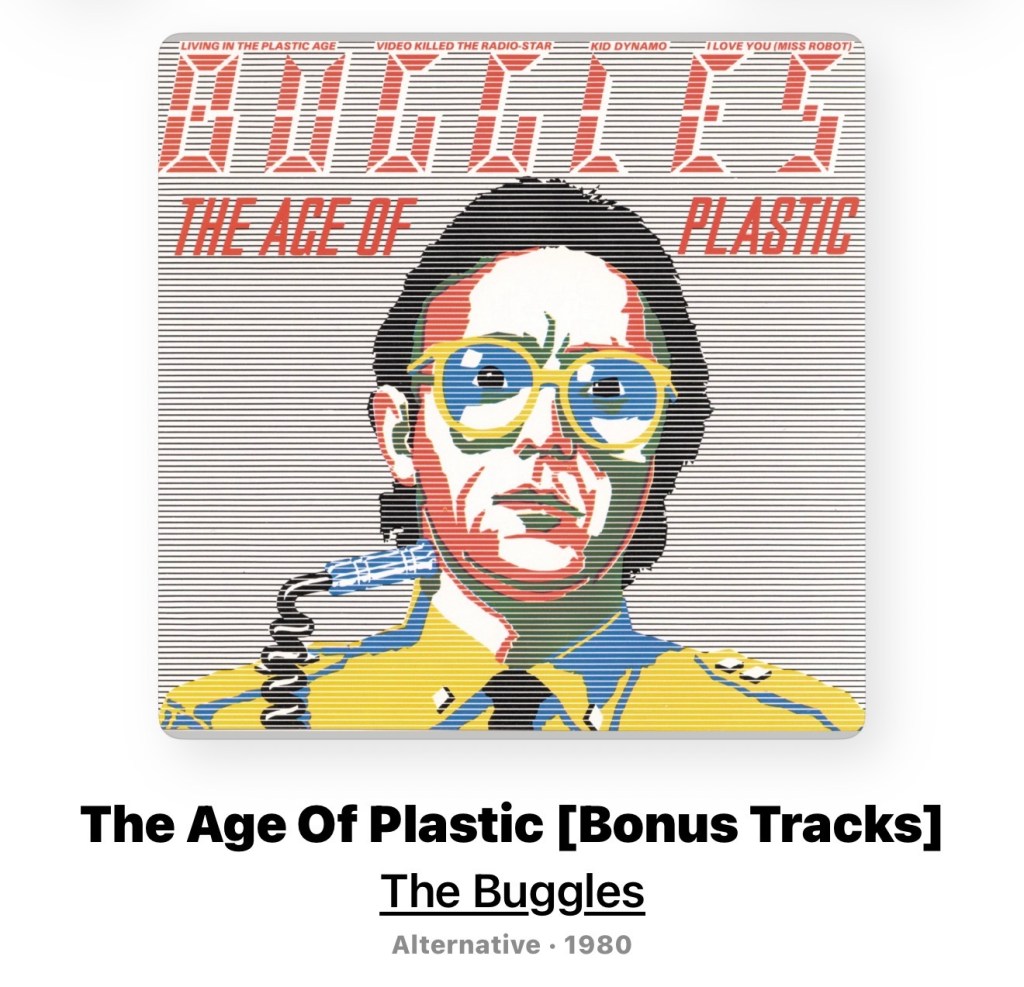
The Plastic Age
The opening track immediately establishes the world we are entering.
Everything is bright. Everything is modern. Everything is efficient.
And everything feels just slightly wrong.
There is a wonderful tension throughout the album between optimism and unease. The future looks fabulous in the brochure, but somebody has forgotten to mention what happens to the people living inside it.
Montague approves of this sort of thing.
Progress should always be inspected carefully, preferably while wearing a good jacket.
Video Killed the Radio Star
Yes, it is that song.
And familiarity can sometimes make us forget just how strange and clever it actually is.
Behind that enormous, irresistible chorus is something rather sad: the disappearance of one world as another takes its place.
It isn’t really celebrating the future.
It is waving goodbye to the past.
The voices sound almost ghostly in places, as though broadcasting from a radio station that has already closed down.
Forty-odd years later, the technology has changed several more times, but the sentiment hasn’t.
Something new arrives.
Something old disappears.
And somebody, somewhere, misses it.
Kid Dynamo
This is where the album begins revealing how much more there is beyond its famous single.
Kid Dynamo is bright, theatrical and faintly peculiar — precisely the sort of pop song that makes Montague’s ears stand upright.
There is an exuberance to it, but once again it never feels entirely carefree.
The machines are dancing.
I am simply not certain whether they have invited us.
I Love You (Miss Robot)
A love song for the electronic age.
Which sounds ridiculous until you realise that, in 2026, people routinely form emotional relationships through screens, devices and artificial personalities.
Suddenly the joke becomes considerably less funny.
There is tenderness here, but also distance. Technology can imitate companionship remarkably well.
Whether it can replace it is another matter entirely.
Montague has therefore decided to keep both his record player and his friends.
Sensible rabbit.
Clean, Clean
One of the album’s most deliciously nervous songs.
Everything is polished, controlled and sanitised, yet the effect is almost claustrophobic.
The obsession with perfection becomes its own form of disorder.
The future promised cleaner cities, cleaner homes and cleaner lives.
Unfortunately, humans remain stubbornly messy.
I consider this reassuring.
Elstree
Possibly the emotional centre of the album.
Here the technology retreats slightly and something much more human emerges: disappointment, memory and the strange sadness of having once been close to glamour.
Elstree feels like somebody standing outside the gates of their former dreams.
The film industry becomes another machine — creating fantasies for everyone else while the people producing them quietly disappear behind the scenery.
Beautifully observed.
And rather sad.
Montague pours another cup of tea.
Astroboy (And the Proles on Parade)
A wonderfully odd title for a wonderfully odd piece of pop.
The album’s fascination with manufactured culture becomes particularly obvious here.
Heroes are created.
Images are distributed.
Everyone marches along.
There is something both playful and sinister about it, which is one of the album’s great strengths. The Buggles rarely lecture.
They simply build the shiny new world and allow us to notice the cracks.
Johnny on the Monorail
And then comes perhaps the perfect ending.
A monorail ought to represent progress.
Modernity.
Speed.
A magnificent tomorrow.
Instead, Johnny feels strangely alone.
That is The Age of Plastic in miniature.
The machines work.
The city functions.
The future has arrived.
But where exactly did everybody go?
The expanded edition adds Island, Technopop and the very different version of Johnny on the Monorail, all interesting curiosities that allow us to linger a little longer in this peculiar synthetic universe. Technopop, in particular, feels almost like someone cheerfully attaching a label to the entire experiment.
Montague’s favourites
♥ Elstree — the heart hiding behind the machinery.
♥ The Plastic Age — glorious futuristic unease.
♥ Johnny on the Monorail — melancholy travelling elegantly through tomorrow.
And I cannot really exclude Video Killed the Radio Star, because sometimes the famous song became famous for perfectly good reasons.
Montague’s verdict
What makes The Age of Plastic remarkable is that it doesn’t really sound like an album celebrating technology.
It sounds like an album wondering what technology might do to us.
The production sparkles. The melodies are huge. The arrangements are playful and inventive.
But underneath everything lies nostalgia.
For radio.
For cinema.
For human contact.
For versions of the world that technological progress keeps replacing.
That makes the album unexpectedly warm.
The machines may dominate the scenery, but the songs keep looking for people.
And perhaps that is why it still works.
Montague’s rating: 9 little glowing valves out of 10.
🐇🎧 Same songs. Brighter tomorrows.
Although after listening to The Age of Plastic, Montague would probably add:
“…we should perhaps check what sort of tomorrow it is first.” ❤️

