Marcel, at home, thinking about the work he should be doing and not even attempting. Well, that’s what tomorrow is for. Today is just for music.
Darwin suggested that I might have more fun just listening and not thinking & making notes. So last week he hid my pens, and this gave me time to listen.
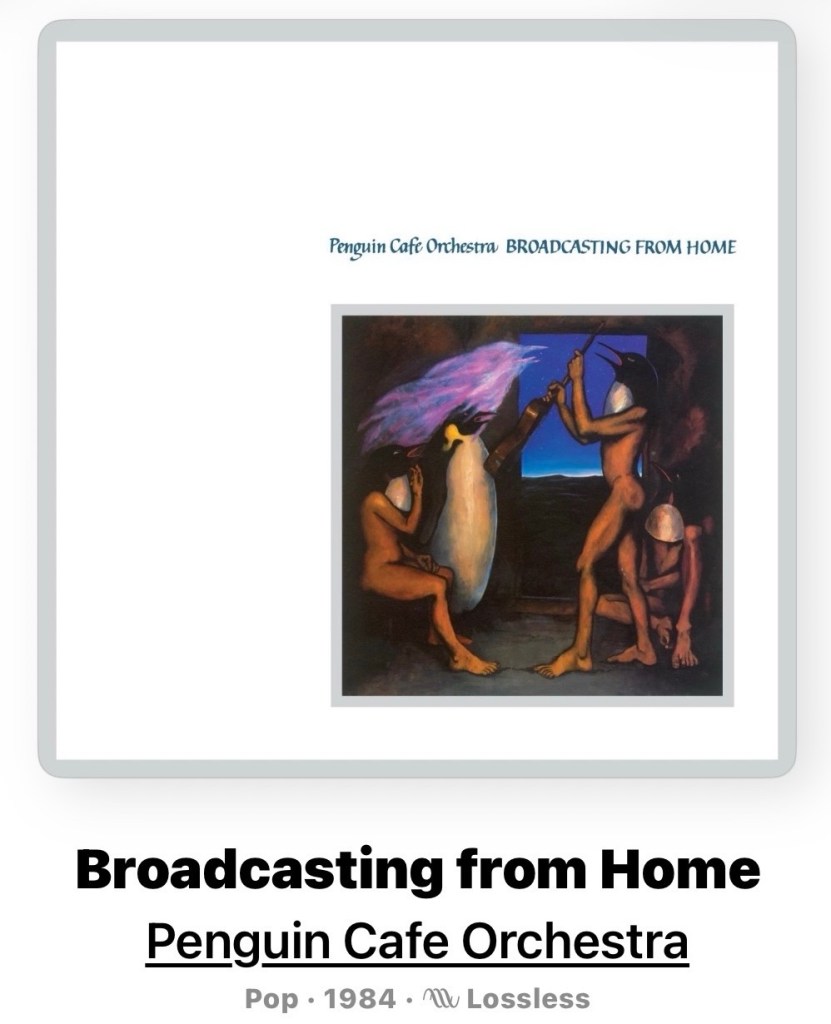
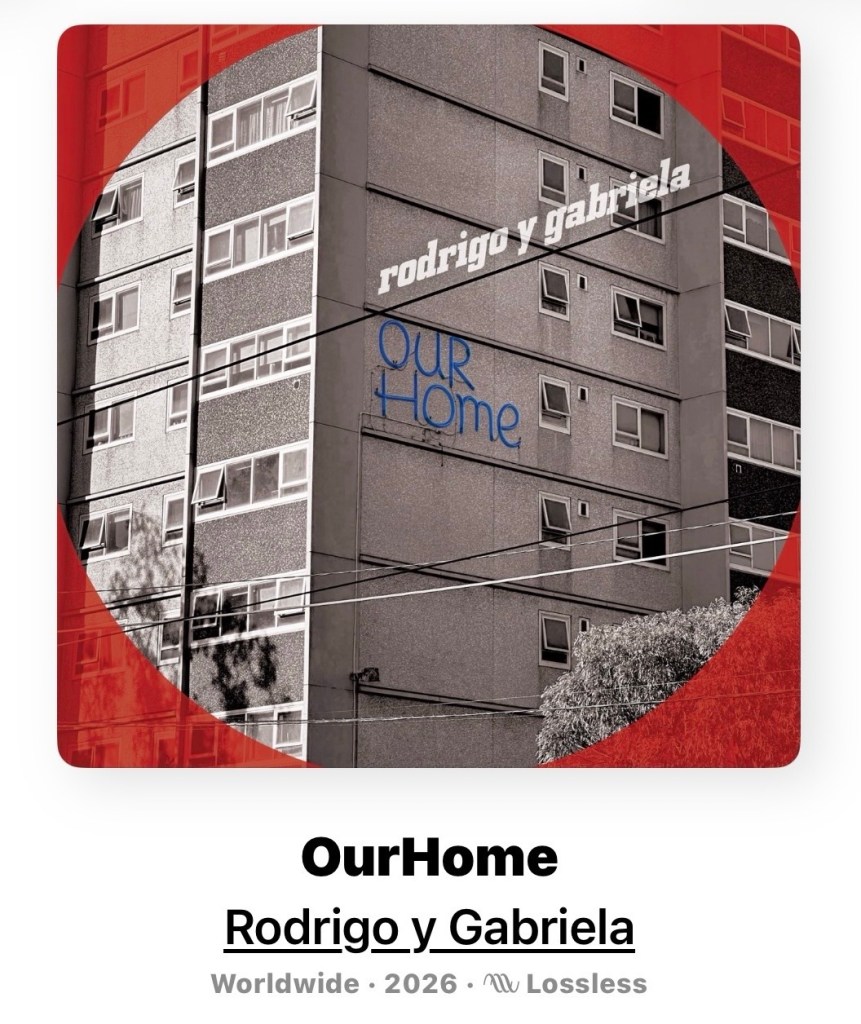
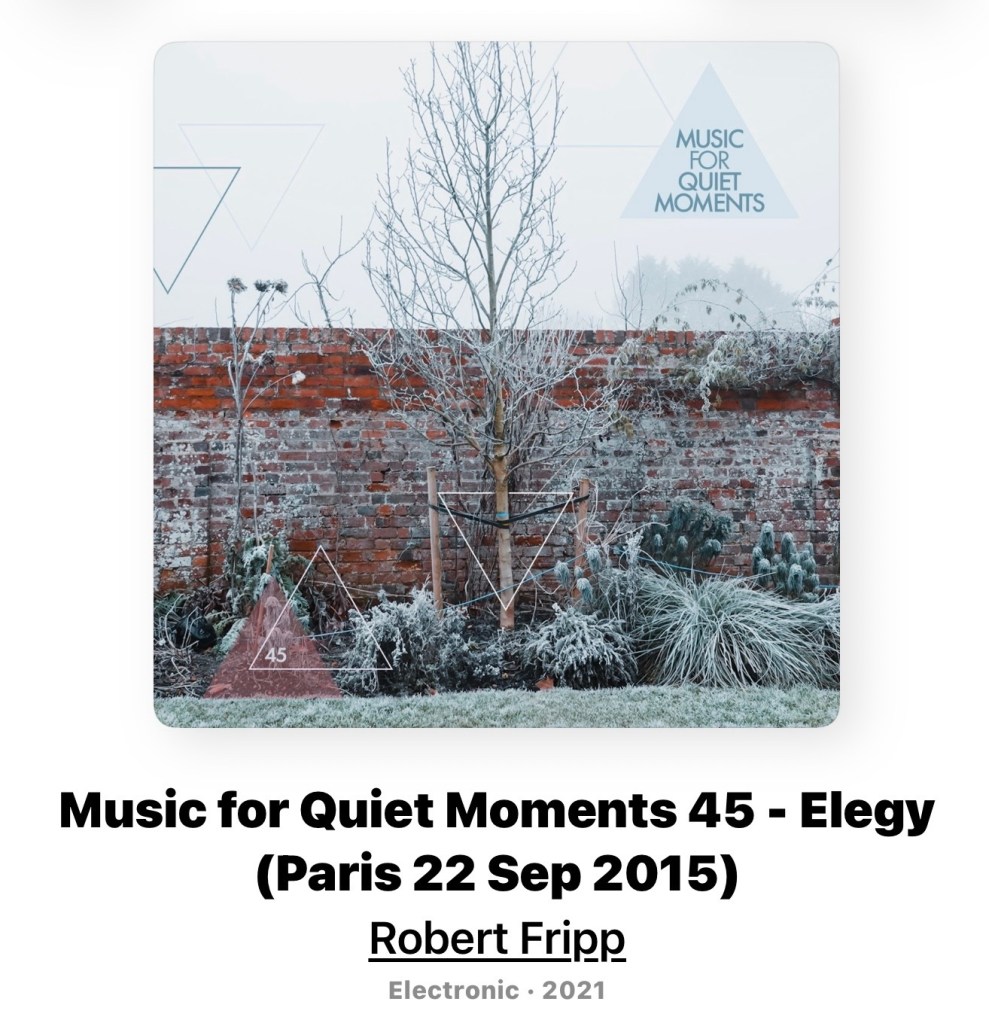
These are some of the albums that my turntable loved…
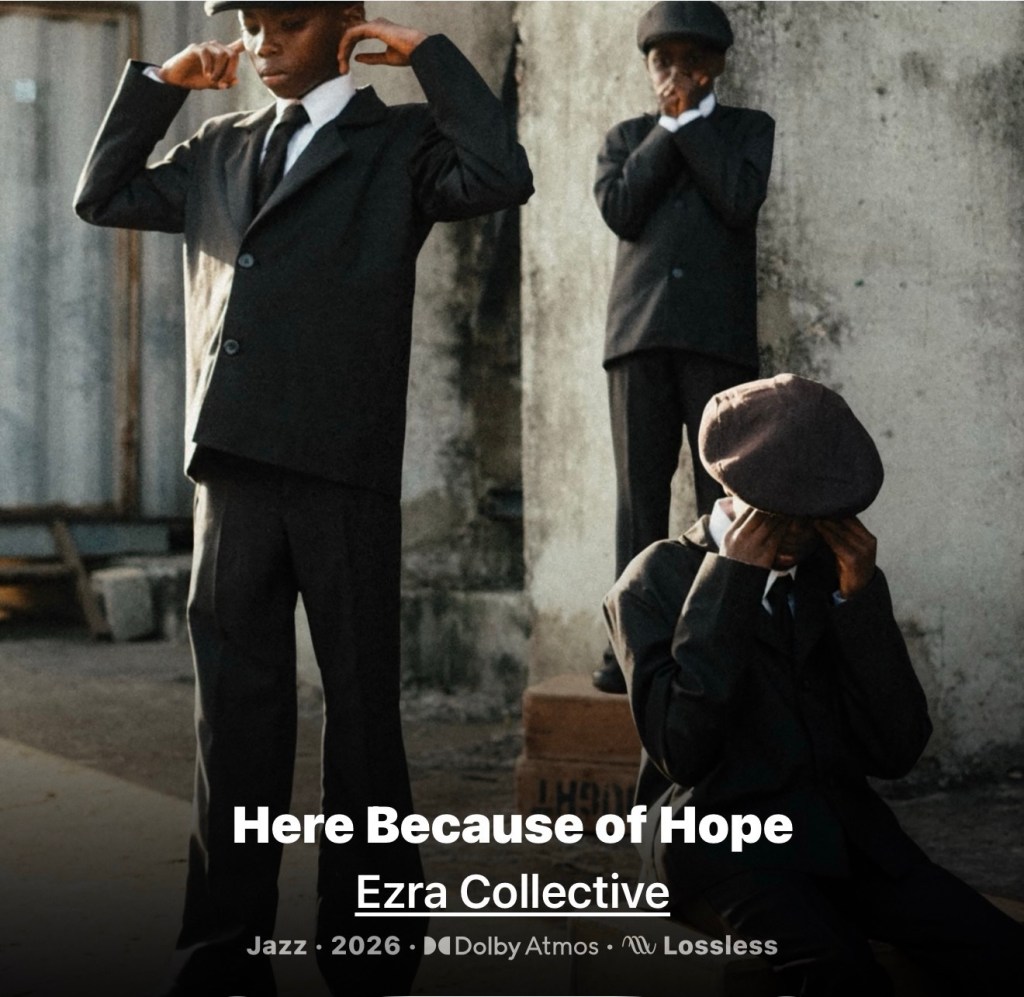
Here Because of Hope by Ezra Collective – image from my collection
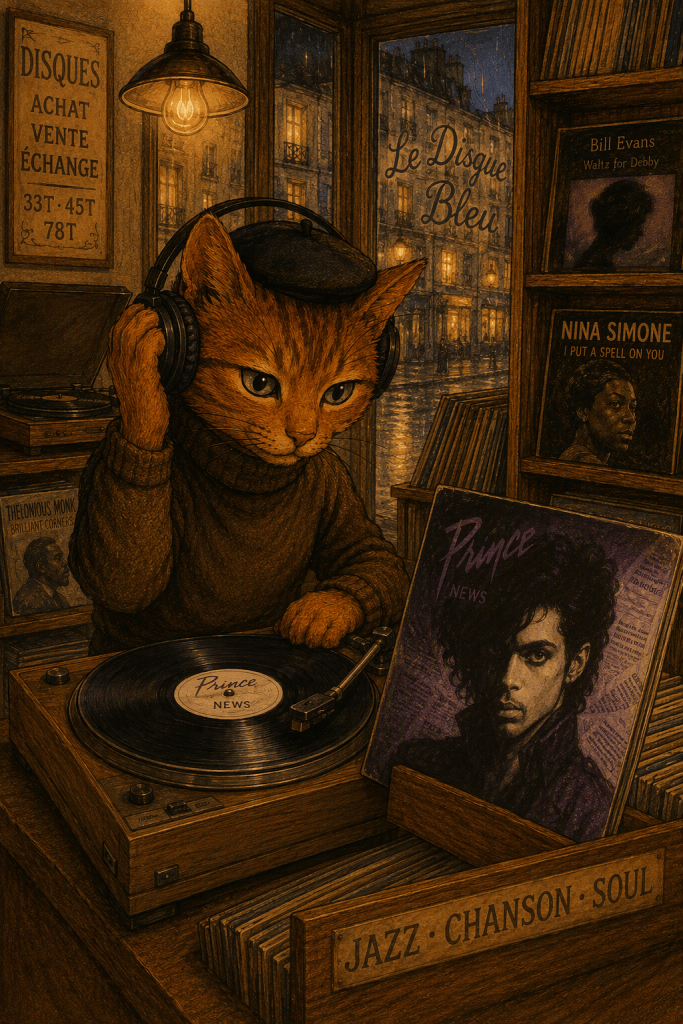
Marcel had closed the door to his music store, turned the lights down low and the volume up.
Marcel Reviews: Prince — N.E.W.S. (2003)
There are albums you play.
There are albums you listen to.
And occasionally there are albums where the sensible course of action is to turn off the lights, close your eyes and allow the thing to happen to you.
N.E.W.S. is one of those.
Prince has dispensed with songs, choruses, singles and practically anything resembling an obligation to explain himself. Instead we have four pieces — North, East, West and South — each exactly fourteen minutes long.
Marcel approves of this immediately.
“Four tracks,” he says, settling into the chair.
“Manageable ambition.”
The coffee is placed beside him.
It will eventually go cold.
Because once North begins, getting up seems inappropriate.
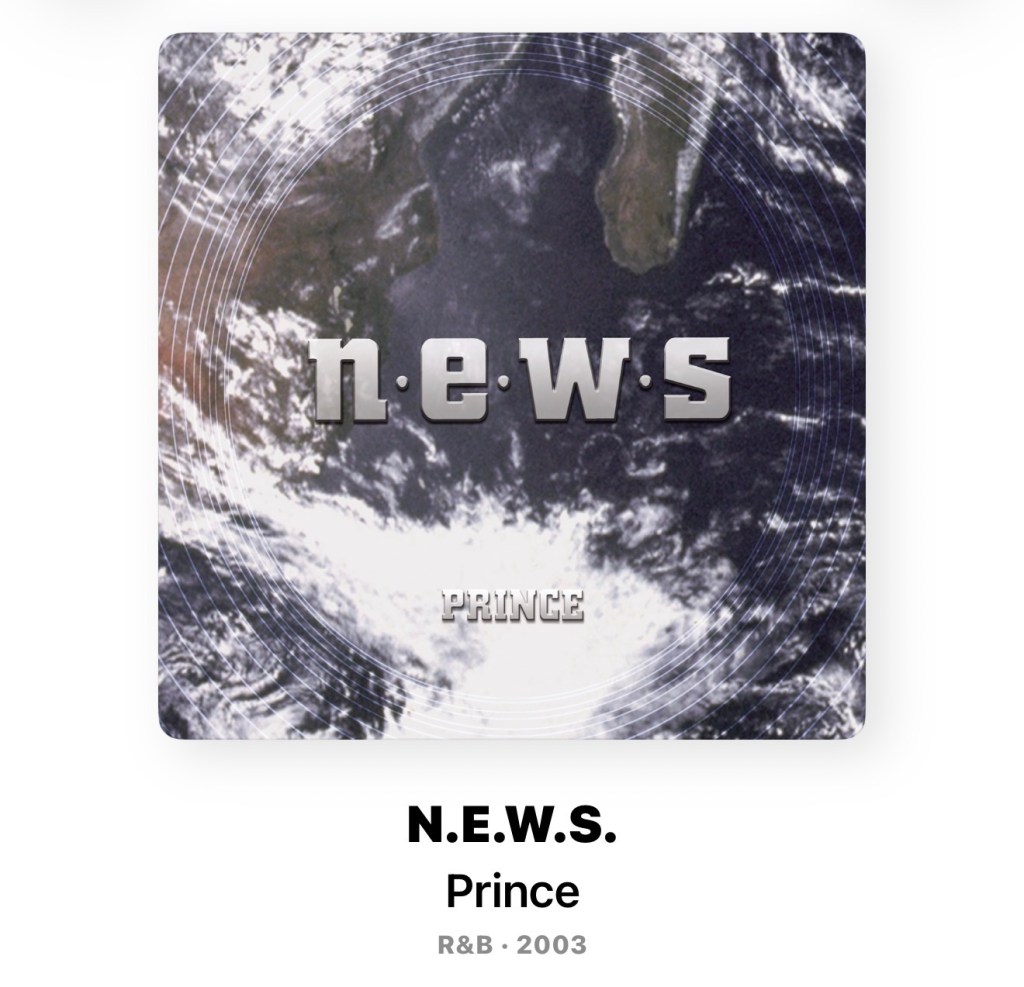
N.E.W.S. by Prince. Album artwork from my own music library.
1. North ❤️
At first, North feels less like a composition than somewhere you have arrived.
There is space everywhere.
Sounds appear, hover for a while and disappear again. Prince doesn’t seem interested in dragging you towards a melody. He allows the music to unfold at its own speed, with Eric Leeds’ saxophone moving through it like another voice in the room.
And underneath everything, the rhythm keeps the piece from drifting entirely into abstraction.
It is jazz, funk, atmosphere and something slightly cinematic, but none of those descriptions quite contains it.
Marcel closes his eyes.
This is significant.
Usually he is checking whether somebody has moved his coffee.
Not today.
2. East ❤️
If North invited us into the room, East begins rearranging the furniture.
There is more movement here, more tension and a slightly stranger atmosphere. Instruments don’t so much take turns as circle one another.
Prince’s great talent on N.E.W.S. is restraint.
He could dominate the record.
He doesn’t.
Instead the pleasure comes from hearing four musicians responding to one another — Prince, Leeds, bassist Rhonda Smith and drummer John Blackwell — without anyone apparently worrying about where the radio edit might begin.
There isn’t one.
Excellent.
Marcel stretches a paw.
“This,” he announces, “is why songs do not always require words.”
Nobody had suggested otherwise.
3. West ❤️
By West, something rather wonderful has happened.
Time has stopped being particularly important.
You are no longer waiting for the next track or wondering when the chorus will arrive because N.E.W.S. has quietly taught you how it wants to be heard.
You surrender.
Little rhythmic ideas emerge. A keyboard phrase passes through. Saxophone answers. Bass shifts underneath. Something changes almost imperceptibly and suddenly you realise the music has travelled considerably further than you thought.
This isn’t background music.
It might initially pretend to be background music.
That is how it gets you.
Play it quietly while doing something else and half the album disappears.
Play it in darkness with your eyes closed and West becomes enormous.
The coffee is now cold.
Marcel considers this an acceptable casualty.
4. South ❤️
By South, the four compass points no longer feel like separate destinations.
They feel like different views of the same landscape.
And this may be the greatest pleasure of N.E.W.S. — its refusal to hurry.
Prince spent much of his career demonstrating how many ideas he could cram into four minutes.
Here he demonstrates something almost opposite:
what happens when he gives an idea fourteen minutes in which to breathe.
Nothing needs to arrive with a fanfare.
Nothing needs to announce itself as THE IMPORTANT BIT.
You simply notice another texture, another rhythm, another small conversation taking place inside the music.
Eventually South finishes.
Marcel opens his eyes.
There is silence.
“Again?”
Yes, Marcel.
Again.
Marcel’s favourites
This presents a problem.
Normally Marcel chooses favourites because standards must be maintained and somebody around here apparently has to demonstrate discernment.
But N.E.W.S. doesn’t really work that way.
❤️ North ❤️ East ❤️ West ❤️ South
For once, the album is the favourite.
Do not shuffle it.
Do not dip into it.
And preferably don’t attempt anything productive while it is playing.
Find somewhere comfortable. Lower the lights. Close your eyes.
Then let Prince, Leeds, Smith and Blackwell take you North, East, West and South for fifty-six minutes.
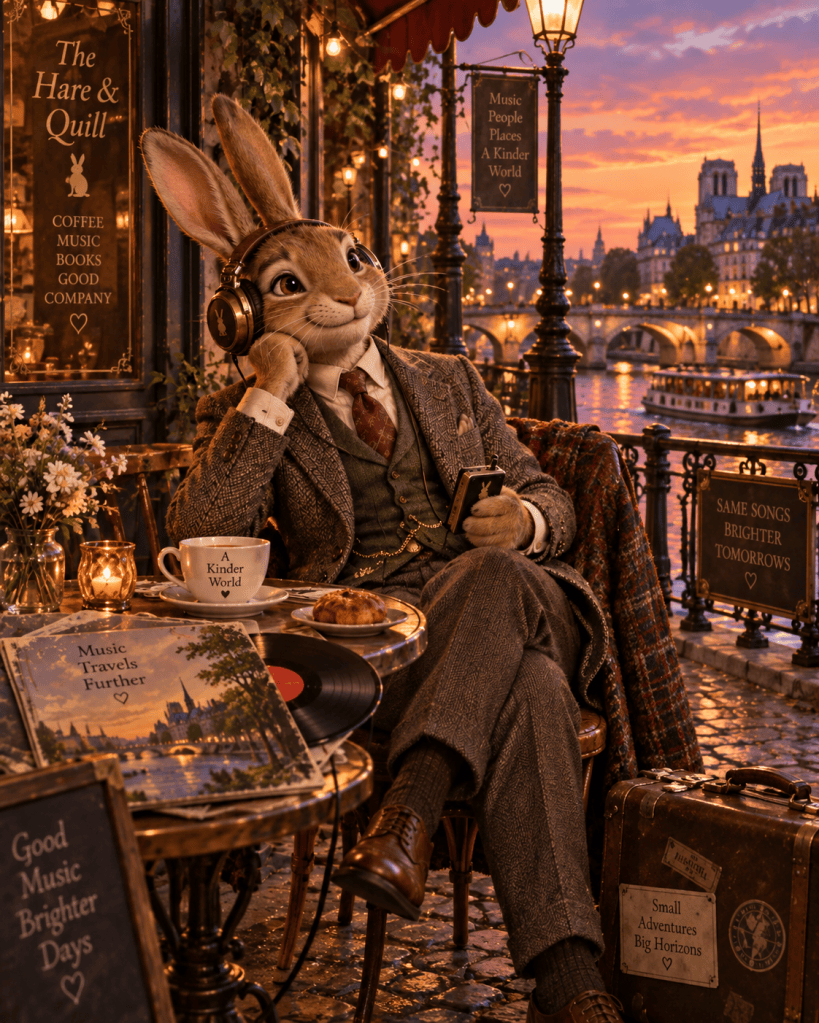
Montague at un monde plus bienveillant, his favourite cafe in the 6th Arrondissement.
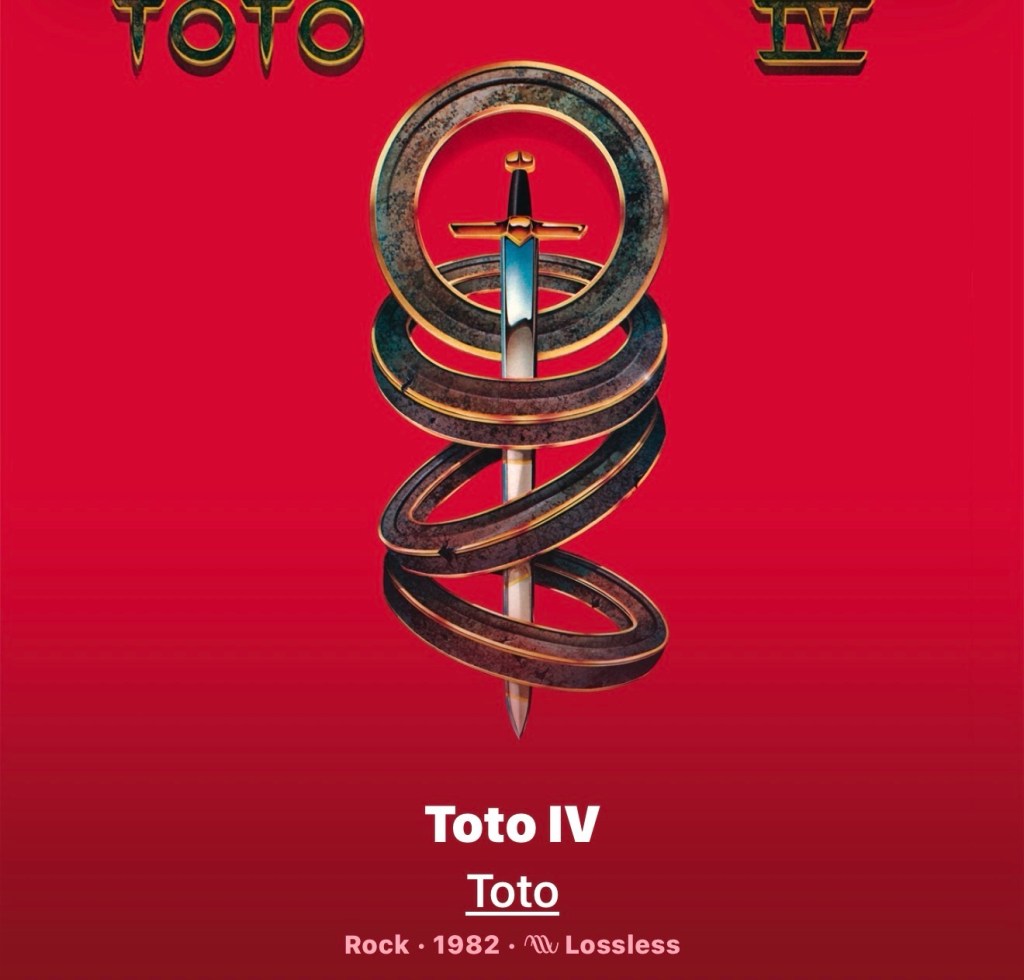
🐇 Montague Reviews: Toto IV — Toto
1982
There are records that swagger.
There are records that experiment.
And then there are records that arrive wearing an immaculate jacket, check that every instrument is correctly positioned, order something expensive from the bar and proceed to demonstrate professional competence at an almost indecent level.
Toto IV is one of those.
Montague had, of course, heard “Rosanna” and “Africa” before. Everybody has. Somewhere, presumably, there is a remote weather station in Antarctica where a lonely scientist is currently tapping the desk during the drum shuffle in “Rosanna”.
But reducing Toto IV to those two songs is rather like visiting Paris, looking at the Eiffel Tower and declaring the rest of the city unnecessary.
Montague disapproves.
Toto IV by Toto. Album artwork from my own music library.
We may as well begin with the enormous elephant wearing studio headphones.
“Rosanna” is absurdly accomplished.
That opening rhythm is instantly recognisable, but what impresses Montague most is how effortless the whole thing sounds. Nothing is fighting for attention. Keyboards, guitars, horns, vocals and rhythm section all seem to know precisely when to appear and, more importantly, when to get out of the way.
It is polished without becoming sterile.
A very difficult trick.
Montague approves considerably.
Make Believe
And this is where the album begins revealing why it deserves to be heard beyond the singles.
“Make Believe” has that wonderful early-1980s West Coast sheen: bright keyboards, perfectly judged backing vocals and a melody that appears uncomplicated until you notice how beautifully everything underneath it has been constructed.
This is one of Montague’s favourites.
It does not demand attention.
It simply earns it.
I Won’t Hold You Back
Oh dear.
Montague has become emotional.
Someone fetch a small pastry.
“I Won’t Hold You Back” is Toto demonstrating that technical ability does not have to come at the expense of feeling.
The arrangement gives the song room to breathe. The vocal is restrained, the melody is gorgeous and the whole thing carries that peculiar melancholy found in the best soft rock: heartbreak presented not through theatrical collapse but through someone quietly staring out of a window while pretending everything is perfectly fine.
Montague recognises this behaviour.
Good for You / It’s a Feeling
These are perhaps the songs that reveal how strong Toto IV really is.
On a lesser album they would simply be respectable album tracks.
Here they form part of the architecture.
“Good for You” keeps the album moving with considerable swagger, while “It’s a Feeling” changes the atmosphere entirely — cooler, stranger and slightly more introspective.
Montague appreciates albums that understand pacing.
Ten enormous singles placed next to each other would be exhausting.
Even rabbits need corridors between the drawing rooms.
Afraid of Love
Now then.
This is tremendous.
“Afraid of Love” has teeth.
The guitars move forward, the rhythm section gets heavier and suddenly the immaculately upholstered Toto drawing room contains someone riding a motorcycle through it.
This is another of Montague’s favourites.
There is real momentum here, but the band never loses control. Toto could probably perform a bank robbery while maintaining perfect time signatures.
Lovers in the Night
A wonderfully muscular piece of album rock.
It has that particular early-80s studio sound where everything seems enormous without becoming muddy.
The drums are enormous.
The guitars are enormous.
The keyboards are enormous.
Montague feels slightly underdressed.
We Made It
Another favourite, and one that deserves far more attention than it receives.
“We Made It” has something Montague particularly likes about Toto: a sense of forward motion.
The chorus arrives naturally rather than being announced with fireworks, and underneath it all is that remarkable rhythm section holding everything together.
It is exactly the sort of song that becomes better after several listens.
First listen: very good.
Fifth listen: hang on.
Tenth listen: why is nobody talking about this?
Montague knows this phenomenon well.
Waiting for Your Love
Possibly one of the album’s most quietly addictive tracks.
There is a looseness here that balances the more meticulously constructed moments elsewhere.
“Waiting for Your Love” grooves.
Not aggressively.
Toto rarely need to shout.
They merely begin playing and assume you will eventually realise how good they are.
You do.
Another Montague favourite.
Africa
And finally we arrive at the song that escaped.
“Africa” stopped belonging entirely to Toto decades ago.
It became cultural furniture.
Weddings. Radio. Television. Internet jokes. Supermarkets. Parties. Probably funerals.
But listening to it inside the album restores something.
Those keyboards suddenly belong to the same musical world as everything that preceded them. The percussion makes more sense. The vocal layers seem less like the ingredients of an enormous hit and more like the culmination of the record.
And yes.
It remains magnificent.
Sometimes enormously popular things are enormously popular because they are enormously good.
Montague is prepared to accept this occasionally.
🐇 Montague’s favourites
Beyond the unavoidable magnificence of “Rosanna” and “Africa”, Montague keeps returning to:
Afraid of Love — because Toto suddenly develops claws. Make Believe — melodic craftsmanship disguised as effortless pop. We Made It — the album track that quietly demands promotion. Waiting for Your Love — warm, rhythmic and ridiculously easy to replay. I Won’t Hold You Back — because apparently rabbits can stare wistfully from windows too.
And there is something interesting about those choices.
They reveal that the pleasure of Toto IV isn’t merely in its famous moments.
The middle of the album is extraordinarily strong.
That matters.
Final thoughts
Toto IV could easily have become unbearable.
The musicianship is almost intimidating. The production is pristine. The arrangements are extraordinarily detailed.
Yet somehow it still feels human.
There are hooks.
There is melancholy.
There is swagger.
There are moments when the band simply appears to be enjoying the extraordinary noise they can make together.
And beneath two gigantic singles sits an album full of songs that would have been career highlights for considerably less fortunate bands.
Montague finishes his coffee.
Adjusts his headphones.
Presses play again.
Same songs. Brighter tomorrows.
🐇❤️🎧
Montague verdict: Not merely the album with “Africa” on it.
A beautifully engineered, surprisingly varied and deeply satisfying record whose quieter corners are every bit as rewarding as the songs everybody knows.
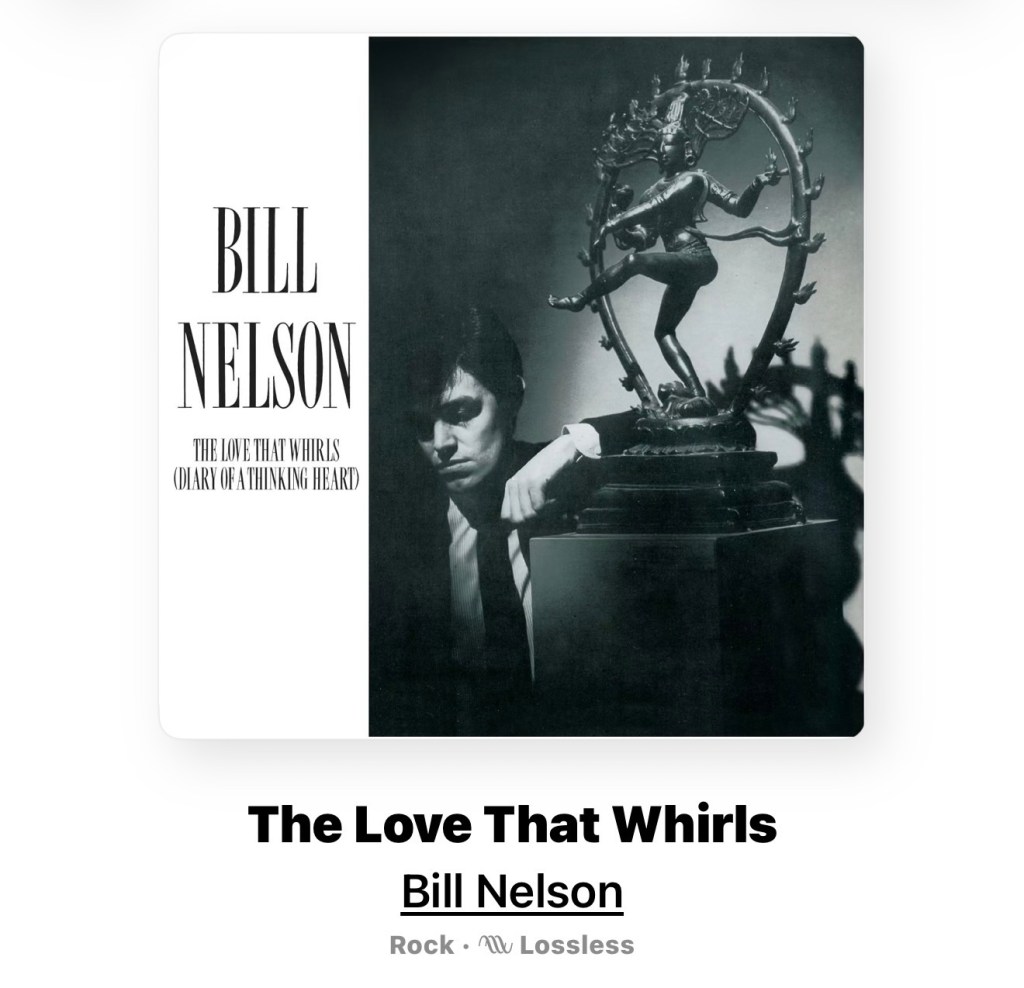
Bill Nelson — The Love That Whirls (Diary of a Thinking Heart)
There are albums one admires.
There are albums one enjoys.
And occasionally there is an album that seems to have constructed its own private universe and quietly invites you inside.
The Love That Whirls is one of those.
I bought The Love That Whirls in 1982, around the time my parents split up. It was one of the first records I chose for myself in a suddenly altered world, and I have loved it ever since.
Recorded during 1981 and released the following year, it marked a distinct shift in Bill Nelson’s solo work: polished, electronic, romantic and thoroughly modern, yet never sterile. Nelson created almost everything himself, which perhaps explains why the record feels so completely inhabited by one imagination.
It is not simply an album containing songs and instrumentals.
It is an album where the songs appear to be dreaming the instrumentals into existence.
The vocals give us desire, intimacy, language and character.
The instrumentals give us memory, space, colour and those strange inner rooms words cannot quite enter.
The Love That Whirls — Bill Nelson. Album artwork from my own music library.
The October Man may be the album’s quiet masterpiece.
There is a maturity to it that separates it from straightforward synth-pop romanticism. Autumn here feels less like decoration than a state of mind: beauty experienced with full awareness that time is moving.
That is what gives the song its weight.
It is not melancholy exactly.
It is consciousness.
Eros Arriving introduces desire almost ceremonially. The title sounds mythic because Nelson treats erotic feeling as something larger than appetite — a force entering the room.
Flaming Desire is more immediate, but still beautifully controlled. Nelson somehow manages to make a title that could have belonged to the most overwrought song imaginable sound elegant.
A Private View is intimate in precisely the right way: suggestive rather than explanatory.
And Hope for a Heartbeat brings something brighter — melodic, human, almost buoyant — without breaking the album’s atmosphere.
The fact that both Eros Arriving and Flaming Desire were singles makes perfect sense. They are among the most accessible entrances into Nelson’s strange little palace.
The instrumentals
This is where The Love That Whirls becomes something more interesting than an excellent collection of songs.
Waiting for Voices feels suspended between thought and speech.
The title alone is wonderful: an instrumental about waiting for something to be spoken.
Portrait of Jan With Flowers behaves almost like a painting. It is still, tender and observant. Nothing needs to happen because the act of looking is the event.
And then there is When Your Dream of Perfect Beauty Comes True.
That title could almost serve as a manifesto for the entire album.
Because Nelson seems fascinated not simply by beauty, but by the pursuit of it — the image formed in the mind before reality intrudes.
The music exists in that brief, exquisite interval.
The love that whirls
Knowing Nelson’s explanation of the title adds another layer.
The whirling dervish does not turn because it is dizzy.
It turns as an expression of devotion.
Love becomes motion.
Motion becomes transcendence.
That idea runs throughout the record: desire constantly transforming into something else — beauty, memory, spirituality, imagery, sound.
Which explains why the instrumentals belong so naturally beside the songs.
The words describe love.
The instrumentals whirl around it.
There is also the Kenneth Anger connection: cinema, occult imagery, sensuality and dream logic.
Suddenly the album’s atmosphere becomes even clearer.
This is pop music viewed through a private cinema.
My favourites make an unusually good map of the record
The vocal tracks I chose —
The October Man Eros Arriving Flaming Desire A Private View Hope for a Heartbeat
— give us Nelson the songwriter.
The instrumentals —
Waiting for Voices Portrait of Jan With Flowers When Your Dream of Perfect Beauty Comes True
— give us Nelson the image-maker.
And I think that distinction is precisely why I love the album.
You are not being asked to choose between a song album and an instrumental album.
You get both.
Better still, each makes the other more effective.
Johann’s verdict
★★★★★
Johann closes the record sleeve.
“One should be wary of any man promising perfect beauty. Fortunately, Mr Nelson merely provides the soundtrack for its arrival.”
Years afterwards, I would meet Bill Nelson himself.
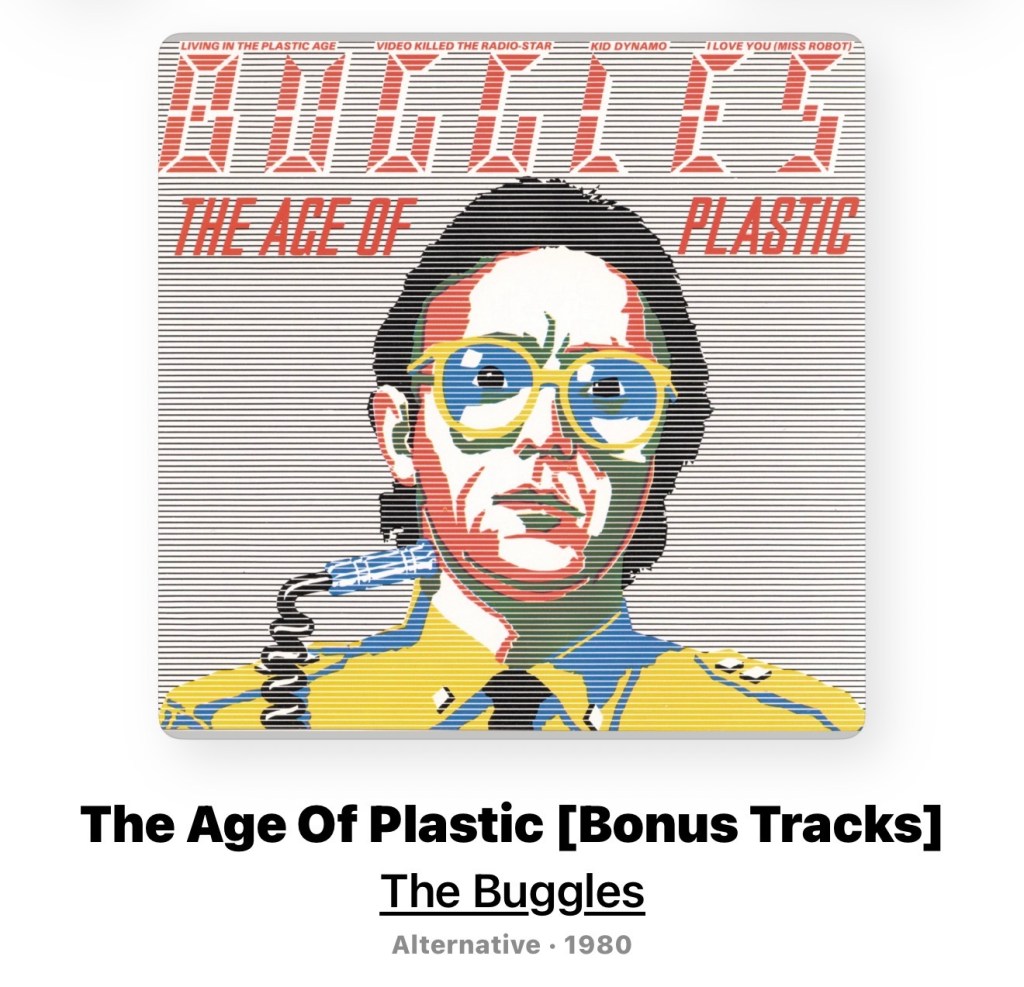
Montague Listens: The Buggles — The Age of Plastic (1980)
There are albums that sound dated because they belong to their time.
And then there are albums that sound wonderfully, unmistakably of their time, while somehow continuing to peer suspiciously into ours.
The Age of Plastic is one of those.
The Buggles appear to have arrived in 1980 carrying synthesizers, television sets, robots, advertising jingles and a slight concern that humanity may accidentally automate itself out of existence.
Naturally, I made tea.
Because beneath all the gleaming electronics, enormous choruses and futuristic production, this is actually a rather wistful record. It is fascinated by technology, certainly, but it isn’t entirely convinced that technology is fascinated by us.
And that makes it much more interesting than a simple collection of clever synth-pop songs.
Album artwork from my own music library.
The Plastic Age
The opening track immediately establishes the world we are entering.
Everything is bright. Everything is modern. Everything is efficient.
And everything feels just slightly wrong.
There is a wonderful tension throughout the album between optimism and unease. The future looks fabulous in the brochure, but somebody has forgotten to mention what happens to the people living inside it.
Montague approves of this sort of thing.
Progress should always be inspected carefully, preferably while wearing a good jacket.
Video Killed the Radio Star
Yes, it is that song.
And familiarity can sometimes make us forget just how strange and clever it actually is.
Behind that enormous, irresistible chorus is something rather sad: the disappearance of one world as another takes its place.
It isn’t really celebrating the future.
It is waving goodbye to the past.
The voices sound almost ghostly in places, as though broadcasting from a radio station that has already closed down.
Forty-odd years later, the technology has changed several more times, but the sentiment hasn’t.
Something new arrives.
Something old disappears.
And somebody, somewhere, misses it.
Kid Dynamo
This is where the album begins revealing how much more there is beyond its famous single.
Kid Dynamo is bright, theatrical and faintly peculiar — precisely the sort of pop song that makes Montague’s ears stand upright.
There is an exuberance to it, but once again it never feels entirely carefree.
The machines are dancing.
I am simply not certain whether they have invited us.
I Love You (Miss Robot)
A love song for the electronic age.
Which sounds ridiculous until you realise that, in 2026, people routinely form emotional relationships through screens, devices and artificial personalities.
Suddenly the joke becomes considerably less funny.
There is tenderness here, but also distance. Technology can imitate companionship remarkably well.
Whether it can replace it is another matter entirely.
Montague has therefore decided to keep both his record player and his friends.
Sensible rabbit.
Clean, Clean
One of the album’s most deliciously nervous songs.
Everything is polished, controlled and sanitised, yet the effect is almost claustrophobic.
The obsession with perfection becomes its own form of disorder.
The future promised cleaner cities, cleaner homes and cleaner lives.
Unfortunately, humans remain stubbornly messy.
I consider this reassuring.
Elstree
Possibly the emotional centre of the album.
Here the technology retreats slightly and something much more human emerges: disappointment, memory and the strange sadness of having once been close to glamour.
Elstree feels like somebody standing outside the gates of their former dreams.
The film industry becomes another machine — creating fantasies for everyone else while the people producing them quietly disappear behind the scenery.
Beautifully observed.
And rather sad.
Montague pours another cup of tea.
Astroboy (And the Proles on Parade)
A wonderfully odd title for a wonderfully odd piece of pop.
The album’s fascination with manufactured culture becomes particularly obvious here.
Heroes are created.
Images are distributed.
Everyone marches along.
There is something both playful and sinister about it, which is one of the album’s great strengths. The Buggles rarely lecture.
They simply build the shiny new world and allow us to notice the cracks.
Johnny on the Monorail
And then comes perhaps the perfect ending.
A monorail ought to represent progress.
Modernity.
Speed.
A magnificent tomorrow.
Instead, Johnny feels strangely alone.
That is The Age of Plastic in miniature.
The machines work.
The city functions.
The future has arrived.
But where exactly did everybody go?
The expanded edition adds Island, Technopop and the very different version of Johnny on the Monorail, all interesting curiosities that allow us to linger a little longer in this peculiar synthetic universe. Technopop, in particular, feels almost like someone cheerfully attaching a label to the entire experiment.
Montague’s favourites
♥ Elstree — the heart hiding behind the machinery. ♥ The Plastic Age — glorious futuristic unease. ♥ Johnny on the Monorail — melancholy travelling elegantly through tomorrow.
And I cannot really exclude Video Killed the Radio Star, because sometimes the famous song became famous for perfectly good reasons.
Montague’s verdict
What makes The Age of Plastic remarkable is that it doesn’t really sound like an album celebrating technology.
It sounds like an album wondering what technology might do to us.
The production sparkles. The melodies are huge. The arrangements are playful and inventive.
But underneath everything lies nostalgia.
For radio.
For cinema.
For human contact.
For versions of the world that technological progress keeps replacing.
That makes the album unexpectedly warm.
The machines may dominate the scenery, but the songs keep looking for people.
And perhaps that is why it still works.
Montague’s rating: 9 little glowing valves out of 10.
🐇🎧 Same songs. Brighter tomorrows.
Although after listening to The Age of Plastic, Montague would probably add:
“…we should perhaps check what sort of tomorrow it is first.” ❤️
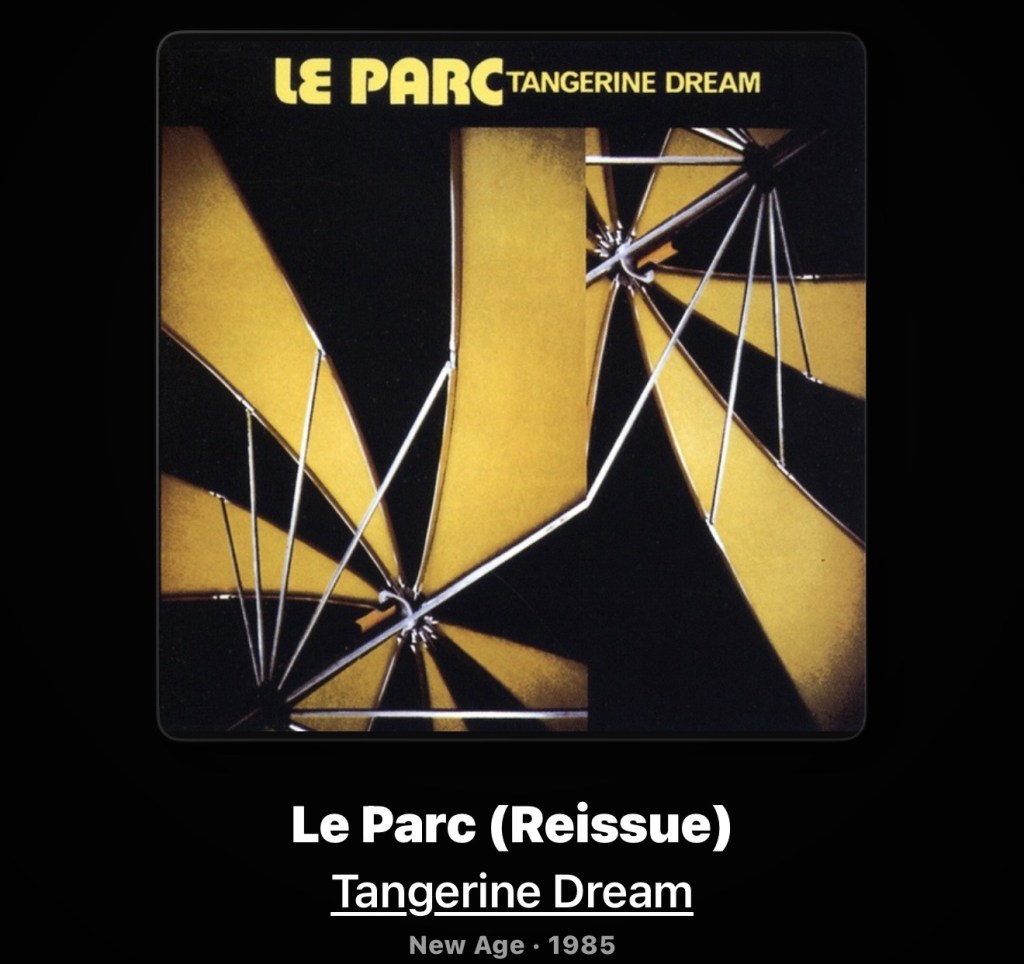
Renaud Loutre listens to… Tangerine Dream — Le Parc (1985)
Album artwork from my own music library.
There are albums that make you want to sit still.
Le Parc is not one of them.
It makes me want to find my coat, put a radio in my bag and disappear somewhere.
Preferably somewhere with trees.
I have a weakness for parks. Cities are terribly fond of telling you what they are — through buildings, traffic, monuments and people rushing importantly from one place to another. A park is different. A park is where a city loosens its collar.
And Tangerine Dream seem to understand this.
Nine pieces. Nine places. Not postcards exactly, and certainly not musical tourist guides. They are more like memories of places after you have returned home, when geography and imagination have become muddled together.
Bois de Boulogne (Paris) ★
Paris and I have an understanding.
It agrees to be magnificent and slightly ridiculous, and I agree to keep returning.
The Bois de Boulogne is another Paris altogether. Leave the boulevards behind and suddenly there is water, woodland, long paths and enough space for your thoughts to stop bumping into one another.
Tangerine Dream don’t recreate the park. They do something much better: they give it motion.
The music seems to move constantly forward, like following a path without being entirely certain where it leads. There is something elegant about it, but also just enough unease to make you keep walking.
One of my favourites on the album.
Possibly because I know the feeling.
Bois de Boulogne, Paris
Central Park (New York) ♡
Central Park is impossible.
Someone apparently looked at Manhattan and thought:
“What this needs is an enormous patch of green in the middle.”
Quite right too.
I remember the extraordinary sensation of standing amongst trees while knowing that one of the world’s loudest cities was waiting just beyond them.
This track captures something of that contradiction for me. It doesn’t remove New York from the park. The city seems to remain somewhere inside the music — movement, machinery, lights, people — but softened by distance.
I have a particular fondness for this one.
Perhaps because Central Park itself feels slightly improbable.
Central Park, New York
Gaudi Park (Güell Garden, Barcelona) ★★★
Now this…
This is wonderful.
Barcelona already has the slight disadvantage of looking as though somebody has been allowed to design a city after eating too much cheese before bedtime.
And Gaudi Park feels exactly right to me — playful without becoming silly, strange without becoming alien. The synthesizers twist and change shape in much the same way the surroundings seem determined not to obey a straight line.
Of all the places represented on Le Parc, this is perhaps where the marriage between music and memory works best for me.
I have stood there.
And listening to this takes me back.
Favourite track.
Park Güell, Barcelona
Tiergarten (Berlin)
Berlin doesn’t reveal itself in quite the same way as Paris or Barcelona.
It makes you work a little harder.
There is something cooler and more architectural here, and Tangerine Dream allow the track room to breathe. It feels broader somehow — a landscape rather than a destination.
I haven’t finished with Berlin yet.
I suspect Berlin hasn’t finished with me either.
Zen Garden (Ryoanji Temple, Kyoto)
Here the journey turns inward.
There are fewer imaginary footsteps.
More space.
Perhaps that is the cleverness of Le Parc: travel isn’t always about covering distance. Sometimes the most interesting journey involves standing perfectly still and noticing what your brain does when nobody gives it anything to chase.
I am not especially good at that.
I am an otter.
We investigate things.
Le Parc (L.A. – Streethawk) ★★
And then Tangerine Dream put wheels on everything.
Le Parc has movement written through it. Nighttime streets, lights sliding across glass, machines moving through a city that never entirely seems asleep.
Yes, it was used for Streethawk, but even separated from that association it has a wonderfully cinematic quality. You don’t merely listen to it.
You go somewhere.
Where?
I’m not entirely sure.
That is probably why I like it.
Hyde Park (London)
Hyde Park is less exotic to me than Kyoto or Yellowstone, but that doesn’t make it less interesting.
Perhaps familiarity changes the way we listen to places. You don’t arrive with expectations. You notice smaller things instead: people on benches, conversations passing you, water, dogs, bicycles, somebody eating something they really should not be feeding to the ducks.
Tangerine Dream make it feel temporarily unfamiliar again.
That is quite a trick.
The Cliffs of Sydney (Sydney)
Suddenly the album opens outward.
Sky. Water. Distance.
You can almost feel the horizon getting larger.
There is a recurring quality throughout Le Parc that I particularly like: Tangerine Dream aren’t trying to describe scenery literally. They appear more interested in the emotional temperature of being somewhere.
Sydney feels expansive.
Yellowstone Park (Rocky Mountains)
And finally, we leave the city behind altogether.
There is something appropriate about ending here. After Paris, New York, Barcelona, Berlin, Kyoto, Los Angeles, London and Sydney, humanity gradually seems to become less important.
Landscape wins.
I rather like that.
Renaud’s travelling bag
🥇 Gaudi Park A marvellous collision of place, imagination and synthesizers.
🥈 Bois de Boulogne Paris wandering music. Elegant, mysterious and constantly moving.
🥉 Le Parc Night-time adventure. Put your headphones on and disappear.
Special fondness: Central Park Because finding a forest in Manhattan remains one of humanity’s better ideas.
Final thoughts
Le Parc isn’t really an album about nine parks.
It is an album about what happens when place becomes memory.
I’ve walked beneath the trees of the Bois de Boulogne. I’ve wandered around Gaudí’s extraordinary playground in Barcelona. I’ve stood in Central Park with Manhattan rising beyond the branches.
None of them sounded like Tangerine Dream at the time.
But memories are peculiar things.
Perhaps they do now.
Renaud Loutre 🦦 Traveller. Listener. Occasional disappearance down interesting paths.
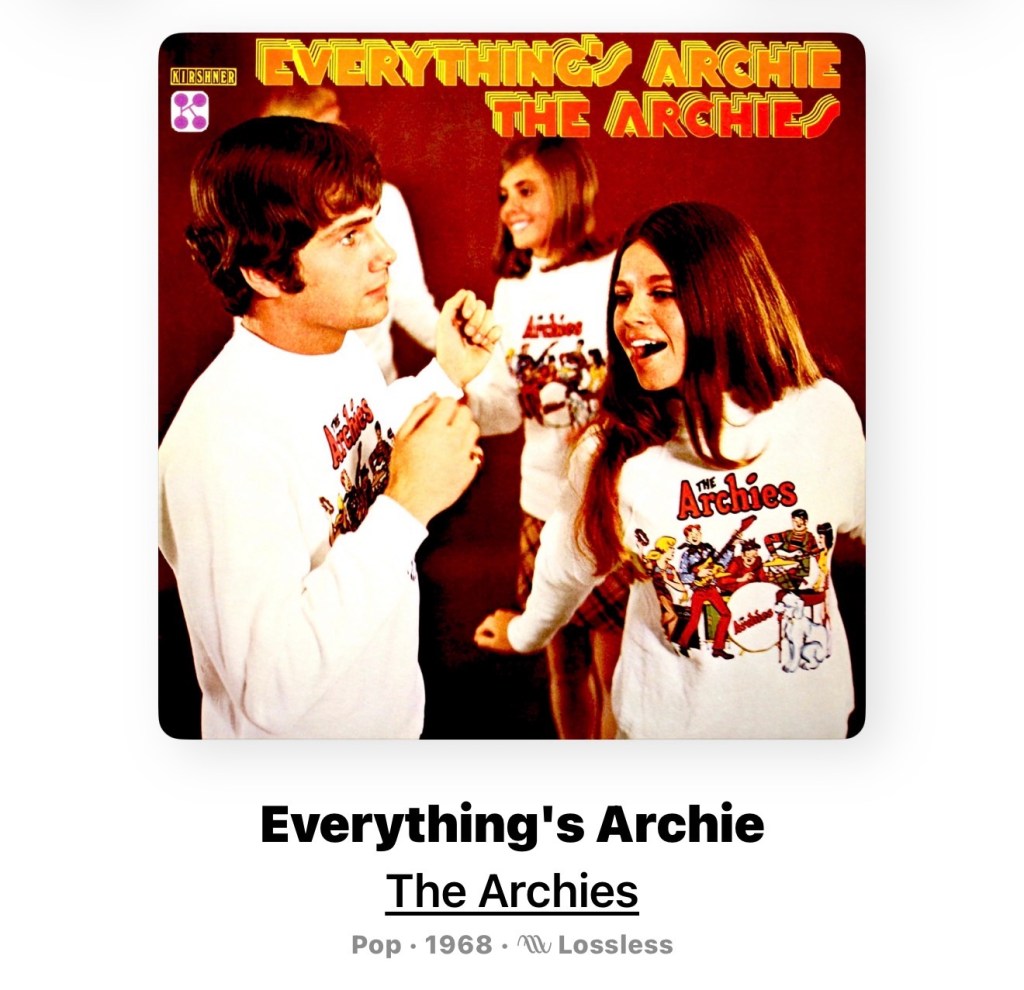
🐾 Darwin Listens: Everything’s Archie — The Archies
There are albums that demand analysis, albums that invite contemplation, and albums that simply arrive wearing a huge grin and carrying enough sugar to incapacitate a small village.
Everything’s Archie belongs firmly in the third category.
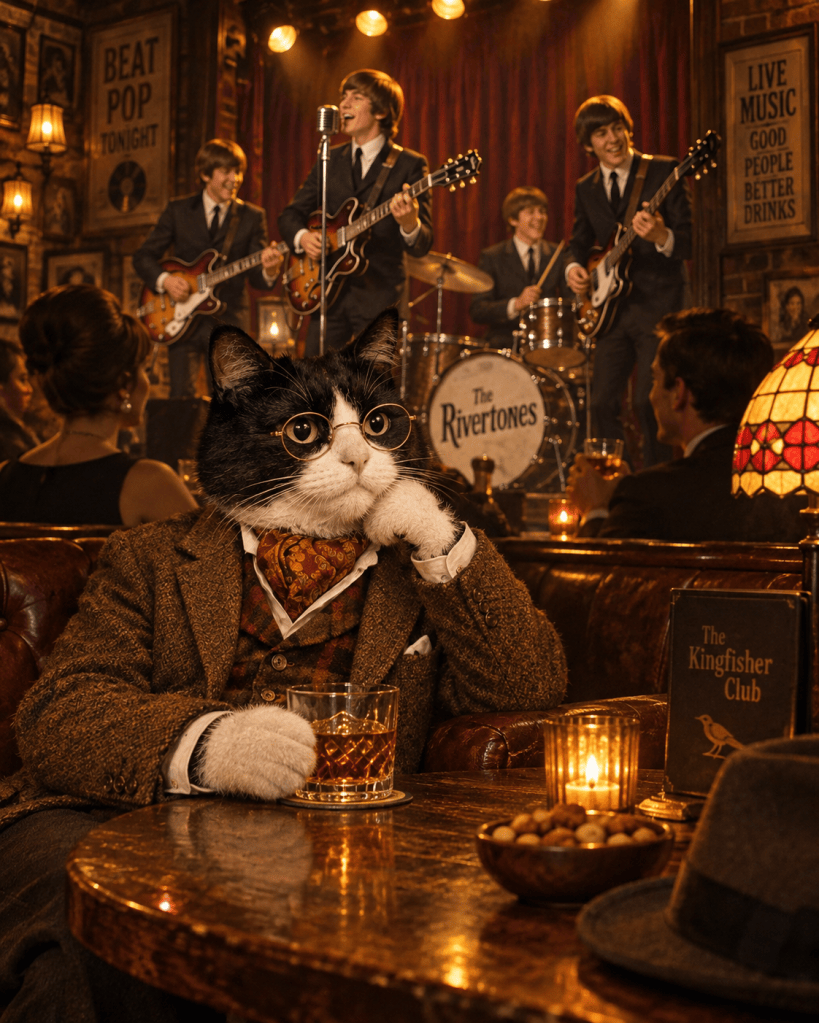
The Archies were, of course, a fictional band — which presents Darwin with absolutely no difficulty whatsoever. He is, after all, a cat in a tweed suit reviewing records.
What matters is whether the noise works.
And much of this does.
This is bright, deliberately lightweight late-60s pop: enormous choruses, handclaps, sweet harmonies, cheerful keyboards and lyrics that seem blissfully unaware that angst was ever invented. It is manufactured pop in the best sense of the term — carefully constructed to make three minutes feel better than the three minutes immediately before them.
Bouncy, colourful and unapologetically cartoonish, it immediately establishes that nobody here intends to frighten the horses. There is something oddly charming about how thoroughly committed it is to being cheerful.
Darwin adjusts his spectacles.
“This appears to be fun.”
A dangerous development.
2. Get On the Line
A little more conventional, but still buoyant. The rhythm keeps things moving and there is enough vocal sparkle to prevent the confectionery becoming sticky.
Perfectly pleasant.
Darwin remains seated.
3. Bicycles, Roller Skates and You
The title alone tells you almost everything.
This is sunshine, suburban pavements and innocent romance distilled into pop music. It sounds like something that should accompany a montage involving striped jumpers and absolutely no adult responsibilities.
Ridiculous.
Rather lovely.
4. Bang-Shang-A-Lang
Now we are getting somewhere.
Complete nonsense as language, excellent sense as pop music.
The chorus arrives like someone opening the curtains on a sunny morning. There is an infectious directness to it that makes resistance seem unnecessarily miserable.
Darwin’s tail begins moving.
5. Feelin’ So Good (S.K.O.O.B.Y.-D.O.O.)
Possibly the point at which the sugar bowl gets knocked over.
It is relentlessly upbeat, but the arrangement has enough movement to keep it from becoming cloying. Those nonsense syllables are exactly the sort of thing sophisticated adults are meant to dislike.
Darwin is not interested in sophisticated adults.
6. Truck Driver
A slight stylistic detour and one of the album’s curiosities.
There is something faintly absurd about Archie Andrews suddenly sounding interested in haulage, but that is part of the appeal of records like this. Nobody appears to have asked whether it made sense.
Darwin respects that enormously.
7. Melody Hill
Gentler and sweeter, with a pleasant melodic sweep.
This is the album taking a brief sit-down before resuming its assault with brightly coloured sweets.
Not essential, but agreeable.
8. Who’s Your Baby?
Another strong slice of polished pop, with a chorus designed to remain in the brain considerably longer than requested.
Darwin has stopped pretending not to enjoy himself.
9. ⭐ Sugar, Sugar
And then that song arrives.
There are records so familiar that it becomes difficult to actually hear them anymore. Sugar, Sugar deserves to be heard again without all the cultural baggage because it is an extraordinarily well-built pop record.
Everything is exactly where it should be: the rhythm, the vocal hook, the little guitar touches, the harmonies and that ridiculous, irresistible chorus.
It is not deep.
It does not need to be deep.
A perfectly constructed pop single is its own kind of achievement.
Darwin absolutely loves it.
“Evolution occasionally produces something unnecessary but delightful.”
10. Who’s Gonna Love Me?
Following Sugar, Sugar is an unenviable job.
This does its best, with another easy-going melody and polished vocal arrangement. Perfectly enjoyable, although the previous song has rather stolen everybody’s lunch money.
11. Jingle Jangle
Another of the stronger tracks.
Bright, rhythmic and packed with hooks, it demonstrates just how effective this particular production machine could be. Everything is carefully engineered, but that does not make the pleasure artificial.
A cake is engineered too.
Darwin likes cake.
12. Inside Out – Upside Down
Slightly more playful musically and another example of the album’s cheerful refusal to become serious.
The melodic twists make it one of the more distinctive tracks in the middle of the record.
13. ⭐ Sugar and Spice
Darwin favourite number two.
This has exactly the right balance of sweetness and energy. The chorus lands immediately, the arrangement sparkles and the whole thing seems to understand that pop music can achieve greatness without ever acquiring a tortured backstory.
It is impossible not to smile at it.
Darwin does not smile publicly.
But his ears give him away.
14. ⭐ Sunshine
Another favourite — and understandably so.
There is a warmth here that feels slightly less cartoonish than some of the surrounding material. It is still feather-light, but there is genuine melodic loveliness underneath the production gloss.
This is one of those forgotten little tracks that makes rummaging through old albums worthwhile.
Darwin circles it in the notebook.
15. This Is Love
A suitably romantic late-album moment.
Nothing revolutionary happens, but everything is attractive and expertly assembled. By this stage you either understand the Archies’ world or have fled the building.
Darwin remains firmly inside.
16. ⭐ Archie’s Party
Now this is exactly how Darwin believes an Archies album should finish.
It feels like everybody has been invited back into the studio, someone has produced fizzy drinks and the entire project has abandoned any remaining dignity.
Joyous, silly and completely appropriate.
One of Darwin’s absolute favourites.
🐾 Darwin’s verdict
Everything’s Archie is not an album demanding to be rediscovered as a lost masterpiece of profound artistic expression.
Thank goodness.
It is something equally valuable: extremely well-made disposable pop that turned out not to be disposable at all.
More than half a century later, the hooks still work.
The production still sparkles.
And Sugar, Sugar remains one of the great examples of the apparently simple pop single being far harder to create than it sounds.
Darwin came expecting novelty.
He found craftsmanship.
And several songs he wants played again.
Darwin’s four favourites
⭐ Sugar, Sugar ⭐ Sugar and Spice ⭐ Sunshine ⭐ Archie’s Party
Darwin rating: 8½ bowls of sugar out of 10
Darwin: “They are fictional teenagers performing manufactured bubblegum pop.”
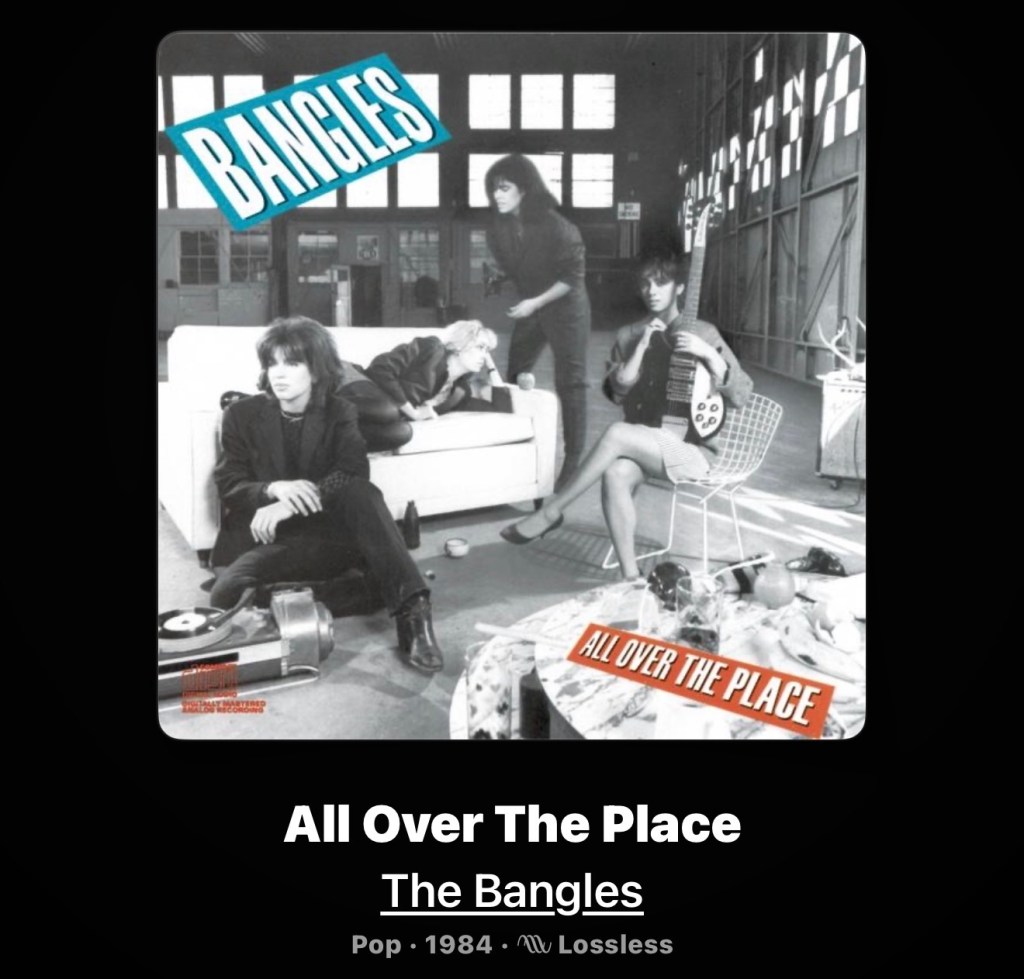
Johann listens: The Bangles — All Over the Place (1984)
There is something wonderful about meeting a band just before the world decides what it thinks they are.
Before Manic Monday. Before Walk Like an Egyptian. Before enormous choruses and immaculate MTV pop, there was All Over the Place: guitars, harmonies, a little garage-rock scruffiness and four musicians sounding as though they are having an extremely good time discovering exactly what sort of band they might become.
And I think I prefer them slightly unfinished.
This record doesn’t stride into the room demanding attention. It catches your sleeve.
Then, about three songs later, you realise you’ve followed it.
Bright guitars, glorious harmonies and just enough bite beneath the sweetness. The Bangles already understand something important: jangling guitars don’t have to mean politeness.
The melody sparkles while the lyric quietly sticks the knife in.
Very civilised.
Johann says: ★★★★½
2. Live
A lovely continuation rather than a dramatic gear change. There’s a distinctly 1960s spirit here, but it doesn’t feel like four people playing dress-up in somebody else’s decade.
Instead, they take those old colours — Byrds, garage pop, harmonies — and repaint them.
I particularly like the looseness. Later Bangles records would become much shinier. Here I can still hear the edges.
★★★★
3. James ⭐
Oh.
There you are.
This is one of those songs that initially appears almost modest beside the bigger tracks, and then somehow becomes the one you keep returning to.
The harmonies are gorgeous, but it’s the melody Johann falls for: wistful without becoming sentimental, intimate without becoming fragile. There’s something slightly unresolved about it, as though we’re walking past somebody else’s memory rather than being told the entire story.
And perhaps that’s exactly why it works.
No huge production. No grand announcement.
Just a beautiful little song.
★★★★★ — Johann favourite
4. All About You
Pure momentum.
The guitars have that glorious slightly compressed garage-pop chime, and the vocal harmonies give everything lift. It’s difficult to sit entirely still through this one.
There is an important distinction between simple and effortless.
The Bangles make this sound effortless.
★★★★½
5. Dover Beach ⭐
Now this is more interesting.
The title immediately brings Matthew Arnold’s poem into the room, whether intentionally invited or not — sea, distance, uncertainty, melancholy — and the song somehow carries a little of that emotional atmosphere without becoming solemn.
There’s a wonderful tension between the music’s brightness and something more reflective underneath it.
This is exactly the sort of song Johann notices.
Everyone else has finished saying, “That was nice,” and moved on.
Johann is still staring out of the window.
★★★★★ — Johann favourite
6. Tell Me
Perhaps one of the less immediately distinctive tracks, but that’s slightly unfair because the quality level here is remarkably consistent.
Another excellent piece of guitar pop, tightly constructed and beautifully sung.
On another band’s album this might be a highlight.
Here it has to compete with James and Dover Beach.
Unfortunate positioning, really.
★★★½
7. Restless
Appropriately named.
There’s more nervous energy here — a little urgency enters the record and stops all that jangling prettiness becoming comfortable.
That is one of All Over the Place’s strengths: it never becomes wallpaper.
Something is always tugging underneath.
★★★★
8. Going Down to Liverpool ⭐
And then this happens.
Written by Kimberley Rew of Katrina and the Waves, it sounds as though it had been waiting for The Bangles to find it.
There’s a peculiar contradiction in the song that Johann loves: the music is ridiculously inviting while the words suggest boredom, unemployment and having absolutely nothing productive to do.
Going down to Liverpool to do nothing.
One of pop music’s better career plans.
The Bangles turn that listlessness into something almost euphoric. Susanna Hoffs’ vocal is beautifully understated, the harmonies glide in behind her, and the whole thing rolls along with that peculiar magic possessed by records that seem simpler the more closely you examine them.
This is the one Johann plays again before continuing.
Possibly twice.
★★★★★ — Johann favourite
9. He’s Got a Secret
And suddenly the sunshine gets a little darker.
There’s an uneasiness here that I like enormously. The guitars remain pretty, the harmonies remain immaculate, but the emotional atmosphere has shifted.
The Bangles were much better at shadows than their later pop-star reputation sometimes suggests.
★★★★½
10. Silent Treatment
Short, sharp and slightly tougher.
By this point the album has established its vocabulary so thoroughly that the band can play with tiny variations — more attack here, a darker harmony there — without abandoning what makes the record coherent.
Again: those guitars.
★★★★
11. More Than Meets the Eye
A beautifully unexpected ending.
Instead of finishing with another jangling sprint, All Over the Place becomes quieter and more contemplative. It feels almost like the lights being turned down after everyone else has left.
And suddenly that slightly throwaway album title begins to make sense.
The record has been all over the place — garage rock, pop, melancholy, psychedelia, folkish harmonies — but never chaotically so.
There was a thread connecting everything.
We just didn’t notice it until the end.
★★★★½
Johann’s view
All Over the Place isn’t the sound of The Bangles perfected.
That’s precisely why I love it.
Later albums would contain bigger singles, larger productions and songs almost everybody knows. But something was inevitably lost when the edges were polished.
Here they still sound like a band.
Four people, guitars, harmonies and an enormous pile of records somewhere behind them: 60s garage rock, folk-rock, psychedelia, power pop. You can hear influences everywhere, yet the personality emerging from them is already unmistakably their own.
And at only about half an hour, it doesn’t outstay its welcome by even thirty seconds.
No filler disguised as importance.
No seven-minute statement of artistic intent.
Just eleven songs.
Then out.
Johann approves enormously.
Johann’s three to take home
🥇 James — the quiet one that somehow gets under the skin. 🥈 Dover Beach — jangling pop staring thoughtfully towards the horizon. 🥉 Going Down to Liverpool — magnificent music about achieving absolutely nothing.
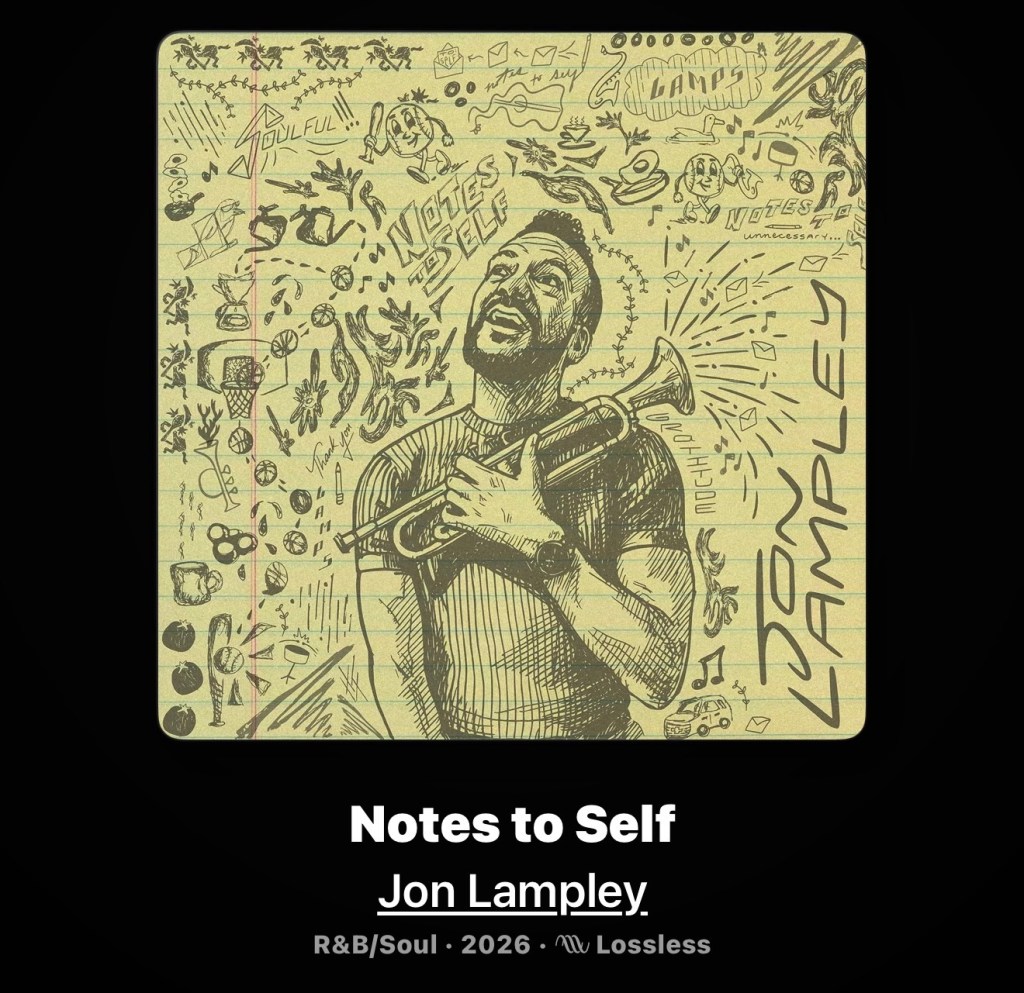
Montague handed this album to me from Jon Lampley, Notes to Self.
A new artist to me, this is his second album and I will be delighted to listen to his debut, Night Service.
Montague gushed as he handed the album over due to the opening track Unnecessarily Soulful Into, is the unofficial anthem for Ramblings Music. I have added the lyrics at the end of this post.
Notes to Self is a compact 25‑minute burst of musical personality — part journal, part jam session, part emotional check‑in. Lampley’s trumpet isn’t just an instrument here; it’s a narrator. The album moves between joy, reflection, and playful self‑awareness without ever losing its warmth.
The “unnecessarily soulful” motif becomes a running joke and a genuine thesis: Lampley is showing that soul doesn’t need to be grandiose. It can be small, daily, human. The collaborations are perfectly chosen, the production is clean but organic, and the whole record feels like a friend handing you a page torn from their notebook.
It’s an album that doesn’t try to be a masterpiece — and that’s exactly why it works.
I love roller-skating in the park, especially when I am listening to some great music.
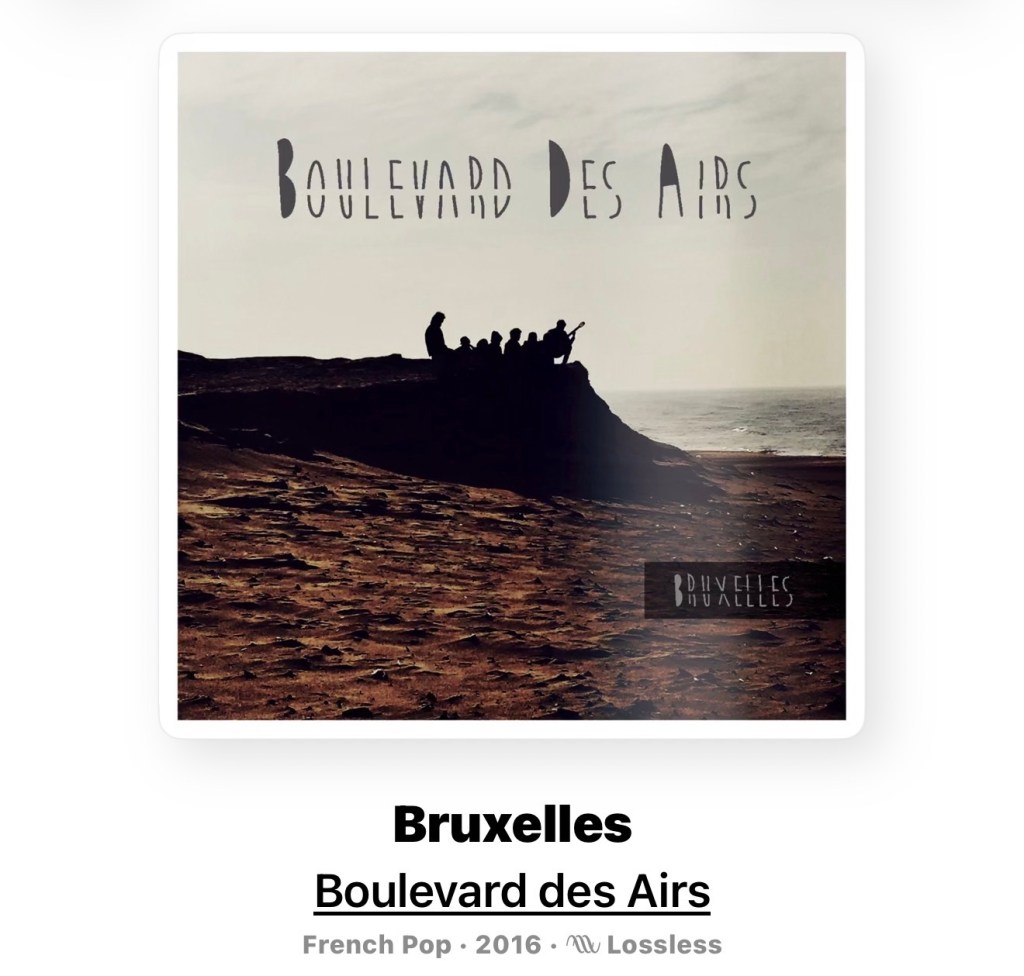
Today I am listening to Bruxelles by Boulevard des Airs.
The way they weave & structure the tunes makes me think I’m in a world of my own.
I especially love to listen to Demain de bon matin, J’nous imagine and the title track Bruxelles ….. sigh!!
Album artwork from my own music library.
⭐ Overview — Bruxelles as a whole
Takeaway: Bruxelles is a panoramic, human album — a blend of French pop, folk, world‑music inflections, and lyrical intimacy. Boulevard des Airs craft a record that feels like a long walk through a city at golden hour: reflective, warm, occasionally political, often romantic, and always communal.
The album’s strength lies in its variety without fragmentation. You move from soft lullabies to brass‑driven street‑festival energy, from introspective ballads to multilingual collaborations. It’s an album that feels lived‑in, like a travel diary written by friends who never stop singing.
Si je m’endors mon amour (Intro)
A gentle curtain‑raiser — whispered, intimate, almost like someone leaning in to tell you a secret. It sets the emotional tone: tenderness first, spectacle later.
Si je m’endors mon amour
The full bloom of the intro. A soft, swaying love song with BDA’s signature acoustic warmth. The brass is restrained, letting the vocals carry the vulnerability.
Emmène‑moi
A fan favourite. Upbeat, bright, and built for singing along. The rhythm section gives it a travelling‑song feel — fitting for a track about being carried away, emotionally or literally.
Demain de bon matin (feat. ZAZ)
ZAZ’s smoky, expressive voice adds texture. The song dances between folk and chanson, with a hopeful, forward‑looking energy. A standout collaboration.
Tu danses et puis tout va
A gentle groove. It’s one of those deceptively simple BDA tracks: light on the surface, quietly emotional underneath. Movement as healing.
J’nous imagine
Dreamy and reflective. The lyrics sketch out imagined futures, and the arrangement mirrors that sense of drifting possibility.
Ce gamin‑là
A socially conscious track — BDA at their storytelling best. It’s tender without being sentimental, with a melody that feels like a hand on the shoulder.
On se regarde
A quieter moment. The song is built around emotional stillness — two people looking at each other, everything unsaid hanging in the air.
Bruxelles
The emotional centrepiece. Melancholic but expansive, with a chorus that opens like a city square. It’s reflective, nostalgic, and beautifully arranged.
Mentira
Spanish‑language fire. A rhythmic, percussive track that adds international colour to the album. It’s sharp, catchy, and politically tinged.
Je resterai
A promise set to music. Steady, warm, and reassuring — one of the album’s emotional anchors.
Laisser faire
Relaxed, breezy, almost coastal. It’s a “let things be” song, and the arrangement mirrors that philosophy with soft brass and gentle percussion.
Quiero Soñar (feat. Pulpul de SKA‑P)
A burst of ska‑infused energy. Pulpul’s presence electrifies the track, giving it a rebellious edge. It’s the album’s most political moment.
Lo Vamos a Intentar
A hopeful Spanish closer. It feels like a farewell wave from the band — optimistic, rhythmic, and full of sunlight.
This particular version of the album has been extended with live tracks, remixes and acoustic versions.
These versions deepen the album’s emotional palette:
Bruxelles — Acoustic — even more intimate; the song becomes a confession.
Ce gamin‑là — Remix — adds punch without losing heart.
Demain de bon matin — Live — ZAZ’s energy shines.
Tu danses et puis tout va — Live — more joyful, more communal.
Ce gamin‑là (feat. Vianney) — Vianney’s voice adds a new emotional layer.
Tu m’emmènes (Inédit) — a lovely surprise; fresh but unmistakably BDA.
Emmène‑moi (feat. A Filetta) — Corsican polyphony meets French pop — a gorgeous fusion.
🌅 Final Thoughts
Bruxelles is an album about connection — between people, languages, cities, and emotions. It’s warm, human, and full of life. Boulevard des Airs manage to make every track feel like part of a shared journey.