Montague – Toto

Montague at un monde plus bienveillant, his favourite cafe in the 6th Arrondissement.

🐇 Montague Reviews: Toto IV — Toto

1982

There are records that swagger.

There are records that experiment.

And then there are records that arrive wearing an immaculate jacket, check that every instrument is correctly positioned, order something expensive from the bar and proceed to demonstrate professional competence at an almost indecent level.

Toto IV is one of those.

Montague had, of course, heard “Rosanna” and “Africa” before. Everybody has. Somewhere, presumably, there is a remote weather station in Antarctica where a lonely scientist is currently tapping the desk during the drum shuffle in “Rosanna”.

But reducing Toto IV to those two songs is rather like visiting Paris, looking at the Eiffel Tower and declaring the rest of the city unnecessary.

Montague disapproves.
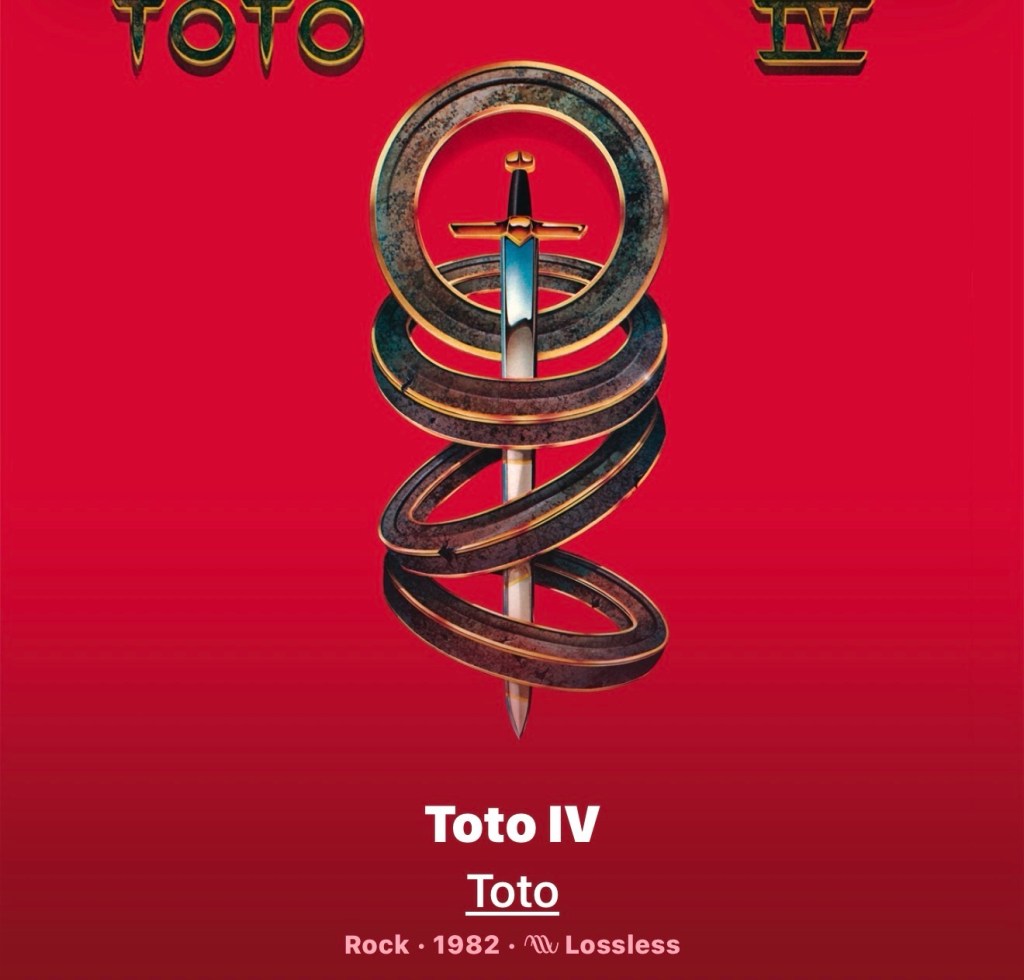
Toto IV by Toto. Album artwork from my own music library.

https://totoofficial.com/

Rosanna

We may as well begin with the enormous elephant wearing studio headphones.

“Rosanna” is absurdly accomplished.

That opening rhythm is instantly recognisable, but what impresses Montague most is how effortless the whole thing sounds. Nothing is fighting for attention. Keyboards, guitars, horns, vocals and rhythm section all seem to know precisely when to appear and, more importantly, when to get out of the way.

It is polished without becoming sterile.

A very difficult trick.

Montague approves considerably.

Make Believe

And this is where the album begins revealing why it deserves to be heard beyond the singles.

“Make Believe” has that wonderful early-1980s West Coast sheen: bright keyboards, perfectly judged backing vocals and a melody that appears uncomplicated until you notice how beautifully everything underneath it has been constructed.

This is one of Montague’s favourites.

It does not demand attention.

It simply earns it.

I Won’t Hold You Back

Oh dear.

Montague has become emotional.

Someone fetch a small pastry.

“I Won’t Hold You Back” is Toto demonstrating that technical ability does not have to come at the expense of feeling.

The arrangement gives the song room to breathe. The vocal is restrained, the melody is gorgeous and the whole thing carries that peculiar melancholy found in the best soft rock: heartbreak presented not through theatrical collapse but through someone quietly staring out of a window while pretending everything is perfectly fine.

Montague recognises this behaviour.

Good for You / It’s a Feeling

These are perhaps the songs that reveal how strong Toto IV really is.

On a lesser album they would simply be respectable album tracks.

Here they form part of the architecture.

“Good for You” keeps the album moving with considerable swagger, while “It’s a Feeling” changes the atmosphere entirely — cooler, stranger and slightly more introspective.

Montague appreciates albums that understand pacing.

Ten enormous singles placed next to each other would be exhausting.

Even rabbits need corridors between the drawing rooms.

Afraid of Love

Now then.

This is tremendous.

“Afraid of Love” has teeth.

The guitars move forward, the rhythm section gets heavier and suddenly the immaculately upholstered Toto drawing room contains someone riding a motorcycle through it.

This is another of Montague’s favourites.

There is real momentum here, but the band never loses control. Toto could probably perform a bank robbery while maintaining perfect time signatures.

Lovers in the Night

A wonderfully muscular piece of album rock.

It has that particular early-80s studio sound where everything seems enormous without becoming muddy.

The drums are enormous.

The guitars are enormous.

The keyboards are enormous.

Montague feels slightly underdressed.

We Made It

Another favourite, and one that deserves far more attention than it receives.

“We Made It” has something Montague particularly likes about Toto: a sense of forward motion.

The chorus arrives naturally rather than being announced with fireworks, and underneath it all is that remarkable rhythm section holding everything together.

It is exactly the sort of song that becomes better after several listens.

First listen: very good.

Fifth listen: hang on.

Tenth listen: why is nobody talking about this?

Montague knows this phenomenon well.

Waiting for Your Love

Possibly one of the album’s most quietly addictive tracks.

There is a looseness here that balances the more meticulously constructed moments elsewhere.

“Waiting for Your Love” grooves.

Not aggressively.

Toto rarely need to shout.

They merely begin playing and assume you will eventually realise how good they are.

You do.

Another Montague favourite.

Africa

And finally we arrive at the song that escaped.

“Africa” stopped belonging entirely to Toto decades ago.

It became cultural furniture.

Weddings. Radio. Television. Internet jokes. Supermarkets. Parties. Probably funerals.

But listening to it inside the album restores something.

Those keyboards suddenly belong to the same musical world as everything that preceded them. The percussion makes more sense. The vocal layers seem less like the ingredients of an enormous hit and more like the culmination of the record.

And yes.

It remains magnificent.

Sometimes enormously popular things are enormously popular because they are enormously good.

Montague is prepared to accept this occasionally.


🐇 Montague’s favourites

Beyond the unavoidable magnificence of “Rosanna” and “Africa”, Montague keeps returning to:

Afraid of Love — because Toto suddenly develops claws.
Make Believe — melodic craftsmanship disguised as effortless pop.
We Made It — the album track that quietly demands promotion.
Waiting for Your Love — warm, rhythmic and ridiculously easy to replay.
I Won’t Hold You Back — because apparently rabbits can stare wistfully from windows too.

And there is something interesting about those choices.

They reveal that the pleasure of Toto IV isn’t merely in its famous moments.

The middle of the album is extraordinarily strong.

That matters.


Final thoughts

Toto IV could easily have become unbearable.

The musicianship is almost intimidating. The production is pristine. The arrangements are extraordinarily detailed.

Yet somehow it still feels human.

There are hooks.

There is melancholy.

There is swagger.

There are moments when the band simply appears to be enjoying the extraordinary noise they can make together.

And beneath two gigantic singles sits an album full of songs that would have been career highlights for considerably less fortunate bands.

Montague finishes his coffee.

Adjusts his headphones.

Presses play again.

Same songs. Brighter tomorrows.

🐇❤️🎧

Montague verdict:
Not merely the album with “Africa” on it.

A beautifully engineered, surprisingly varied and deeply satisfying record whose quieter corners are every bit as rewarding as the songs everybody knows.

Montague – The Buggles

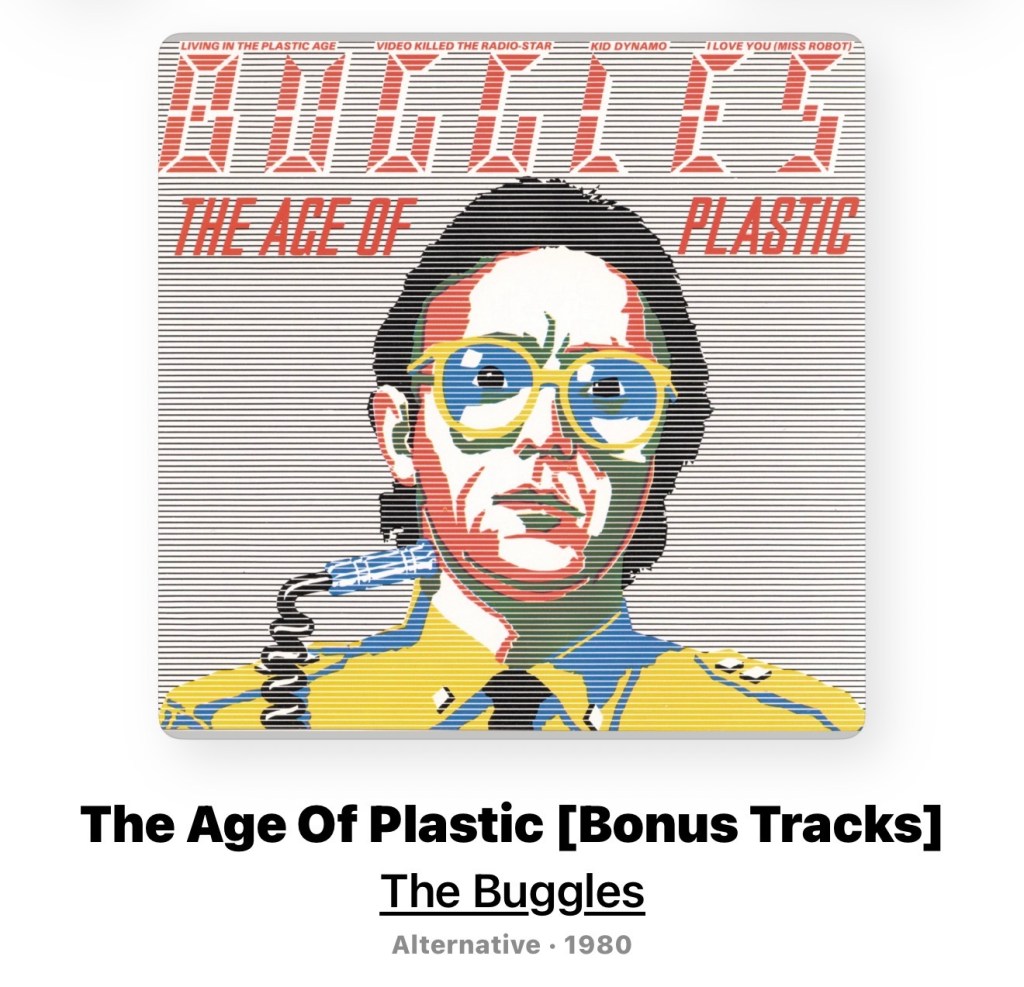
Montague Listens: The Buggles — The Age of Plastic (1980)

There are albums that sound dated because they belong to their time.

And then there are albums that sound wonderfully, unmistakably of their time, while somehow continuing to peer suspiciously into ours.

The Age of Plastic is one of those.

The Buggles appear to have arrived in 1980 carrying synthesizers, television sets, robots, advertising jingles and a slight concern that humanity may accidentally automate itself out of existence.

Naturally, I made tea.

Because beneath all the gleaming electronics, enormous choruses and futuristic production, this is actually a rather wistful record. It is fascinated by technology, certainly, but it isn’t entirely convinced that technology is fascinated by us.

And that makes it much more interesting than a simple collection of clever synth-pop songs.

Album artwork from my own music library.

The Plastic Age

The opening track immediately establishes the world we are entering.

Everything is bright. Everything is modern. Everything is efficient.

And everything feels just slightly wrong.

There is a wonderful tension throughout the album between optimism and unease. The future looks fabulous in the brochure, but somebody has forgotten to mention what happens to the people living inside it.

Montague approves of this sort of thing.

Progress should always be inspected carefully, preferably while wearing a good jacket.

Video Killed the Radio Star

Yes, it is that song.

And familiarity can sometimes make us forget just how strange and clever it actually is.

Behind that enormous, irresistible chorus is something rather sad: the disappearance of one world as another takes its place.

It isn’t really celebrating the future.

It is waving goodbye to the past.

The voices sound almost ghostly in places, as though broadcasting from a radio station that has already closed down.

Forty-odd years later, the technology has changed several more times, but the sentiment hasn’t.

Something new arrives.

Something old disappears.

And somebody, somewhere, misses it.

Kid Dynamo

This is where the album begins revealing how much more there is beyond its famous single.

Kid Dynamo is bright, theatrical and faintly peculiar — precisely the sort of pop song that makes Montague’s ears stand upright.

There is an exuberance to it, but once again it never feels entirely carefree.

The machines are dancing.

I am simply not certain whether they have invited us.

I Love You (Miss Robot)

A love song for the electronic age.

Which sounds ridiculous until you realise that, in 2026, people routinely form emotional relationships through screens, devices and artificial personalities.

Suddenly the joke becomes considerably less funny.

There is tenderness here, but also distance. Technology can imitate companionship remarkably well.

Whether it can replace it is another matter entirely.

Montague has therefore decided to keep both his record player and his friends.

Sensible rabbit.

Clean, Clean

One of the album’s most deliciously nervous songs.

Everything is polished, controlled and sanitised, yet the effect is almost claustrophobic.

The obsession with perfection becomes its own form of disorder.

The future promised cleaner cities, cleaner homes and cleaner lives.

Unfortunately, humans remain stubbornly messy.

I consider this reassuring.

Elstree

Possibly the emotional centre of the album.

Here the technology retreats slightly and something much more human emerges: disappointment, memory and the strange sadness of having once been close to glamour.

Elstree feels like somebody standing outside the gates of their former dreams.

The film industry becomes another machine — creating fantasies for everyone else while the people producing them quietly disappear behind the scenery.

Beautifully observed.

And rather sad.

Montague pours another cup of tea.

Astroboy (And the Proles on Parade)

A wonderfully odd title for a wonderfully odd piece of pop.

The album’s fascination with manufactured culture becomes particularly obvious here.

Heroes are created.

Images are distributed.

Everyone marches along.

There is something both playful and sinister about it, which is one of the album’s great strengths. The Buggles rarely lecture.

They simply build the shiny new world and allow us to notice the cracks.

Johnny on the Monorail

And then comes perhaps the perfect ending.

A monorail ought to represent progress.

Modernity.

Speed.

A magnificent tomorrow.

Instead, Johnny feels strangely alone.

That is The Age of Plastic in miniature.

The machines work.

The city functions.

The future has arrived.

But where exactly did everybody go?

The expanded edition adds Island, Technopop and the very different version of Johnny on the Monorail, all interesting curiosities that allow us to linger a little longer in this peculiar synthetic universe. Technopop, in particular, feels almost like someone cheerfully attaching a label to the entire experiment.

Montague’s favourites

♥ Elstree — the heart hiding behind the machinery.
♥ The Plastic Age — glorious futuristic unease.
♥ Johnny on the Monorail — melancholy travelling elegantly through tomorrow.

And I cannot really exclude Video Killed the Radio Star, because sometimes the famous song became famous for perfectly good reasons.

Montague’s verdict

What makes The Age of Plastic remarkable is that it doesn’t really sound like an album celebrating technology.

It sounds like an album wondering what technology might do to us.

The production sparkles. The melodies are huge. The arrangements are playful and inventive.

But underneath everything lies nostalgia.

For radio.

For cinema.

For human contact.

For versions of the world that technological progress keeps replacing.

That makes the album unexpectedly warm.

The machines may dominate the scenery, but the songs keep looking for people.

And perhaps that is why it still works.

Montague’s rating: 9 little glowing valves out of 10.

🐇🎧 Same songs. Brighter tomorrows.

Although after listening to The Age of Plastic, Montague would probably add:

“…we should perhaps check what sort of tomorrow it is first.” ❤️

Montague – Goat

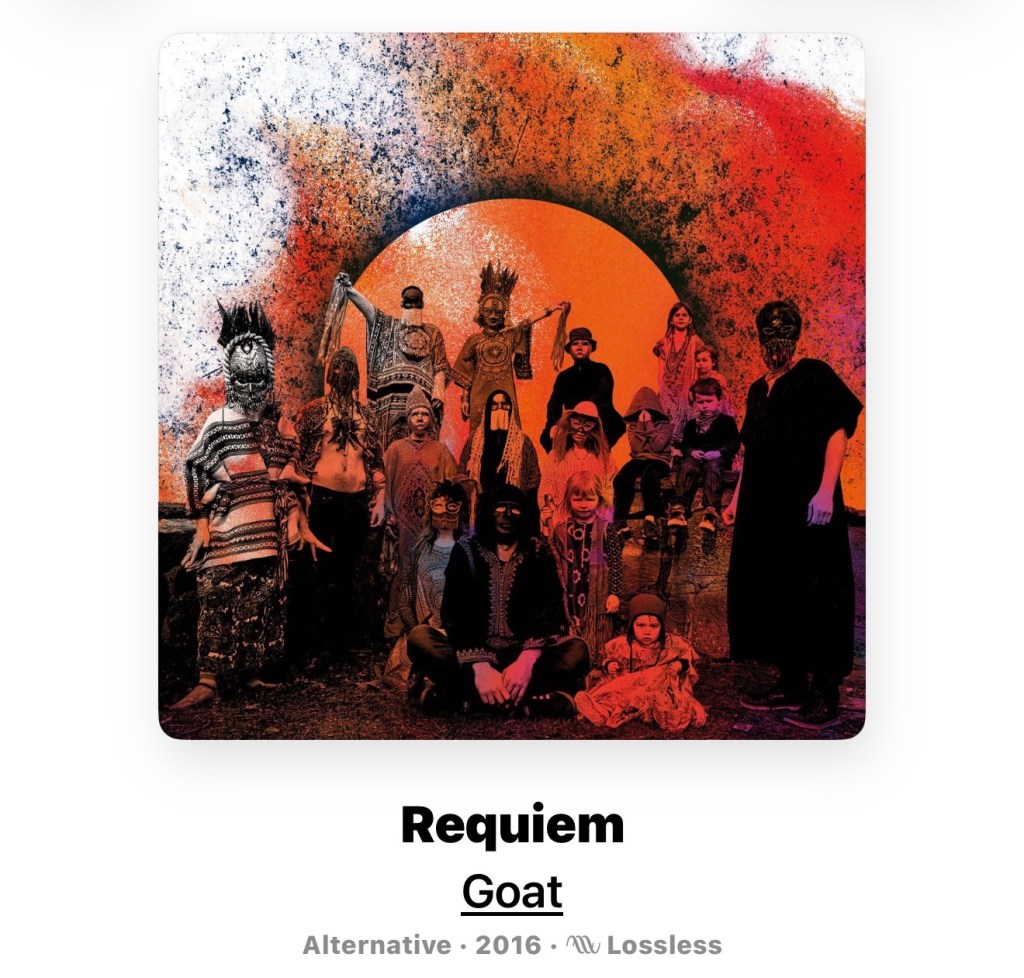
My review today is from Goat. I fell in love with them when I first heard – I Sing in Silence – still a firm favourite today.

Album artwork from my own music library.

🌞 Album Overview — Requiem

Requiem is Goat at their most earth‑bound and ceremonial. Where earlier albums leaned heavily into psychedelic rock, this one feels more like a folk‑ritual, blending:

  • trance rhythms
  • global folk instrumentation
  • communal chanting
  • fuzz‑rock eruptions
  • celebratory chaos

It’s an album that moves like a procession — beginning with invocation, passing through ecstasy, conflict, introspection, and finally ending in communal unity.

The production is intentionally rough‑edged, giving the sense of a live ritual rather than a polished studio creation. It’s immersive, colourful, and defiantly outside the boundaries of genre.

If you enjoy music that feels like stepping into another culture, another mindset, or another world entirely, Requiem is one of Goat’s most transportive works.

Below is one of my creations to try and capture the essence of their music.

🔥 Requiem — Track‑by‑Track

  1. Djôrôlen / Union of Sun and Moon

A ceremonial opening — hypnotic percussion, chant‑like vocals, and a sense of stepping into a circle where something ancient is about to begin. It feels like the album lighting its first torch. There’s warmth here, but also mystery.

  1. I Sing In Silence

A shimmering, almost pastoral groove. Flutes, hand percussion, and a melody that feels like it’s drifting across a summer field. It’s Goat at their gentlest — a moment of peace before the album’s stranger energies arrive.

  1. Temple Rhythms

Pure trance. A percussive spiral that pulls you inward. This track feels like walking deeper into the ritual space — the beat is repetitive in the best way, almost meditative, almost dangerous.

  1. Alarms

A jolt of electricity. Angular guitars, sharper edges, and a sense of urgency. It’s the first moment where the album’s psychedelic haze snaps into something more confrontational.

  1. Trouble In the Streets

A street‑parade‑gone‑feral. Brass, percussion, and a carnival‑like energy that feels celebratory and chaotic at once. It’s Goat’s version of a protest march — colourful, rhythmic, unstoppable.

  1. Psychedelic Lover

A swaggering, fuzz‑drenched groove. This is the album’s most “rock” moment — still ritualistic, but with a seductive, smoky pulse. It’s the track that feels like it could have been a single.

  1. Goatband

A jam session caught in amber. Loose, joyous, communal. You can almost see the musicians in a circle, feeding off each other. It’s messy in a deliberate way — the sound of a band celebrating its own existence.

  1. Try My Robe

One of the album’s strangest delights. Playful, theatrical, almost mischievous. It feels like a character stepping forward during the ritual to deliver a monologue. Goat at their most whimsical.

  1. It’s Not Me

A darker, more introspective turn. The groove is slower, the mood more shadowed. It’s a moment of self‑doubt or self‑distancing within the album’s otherwise communal energy.

  1. All‑Seeing Eye

A mystical centrepiece. The track feels like a vision — swirling instrumentation, a sense of revelation, and a slightly ominous undertone. It’s the album’s spiritual peak.

  1. Goatfuzz

A fuzz‑guitar explosion. Raw, heavy, and ecstatic. It’s the moment where the ritual becomes a rock ceremony — loud, distorted, and cathartic.

  1. Goodbye

A gentle, drifting farewell. After the intensity of Goatfuzz, this feels like the ritual closing, the fire dying down, the crowd dispersing. A soft landing.

  1. Ubuntu

A communal chant to end the album. Warm, inclusive, and spiritually open. It’s the final circle — everyone singing together, the ritual complete.