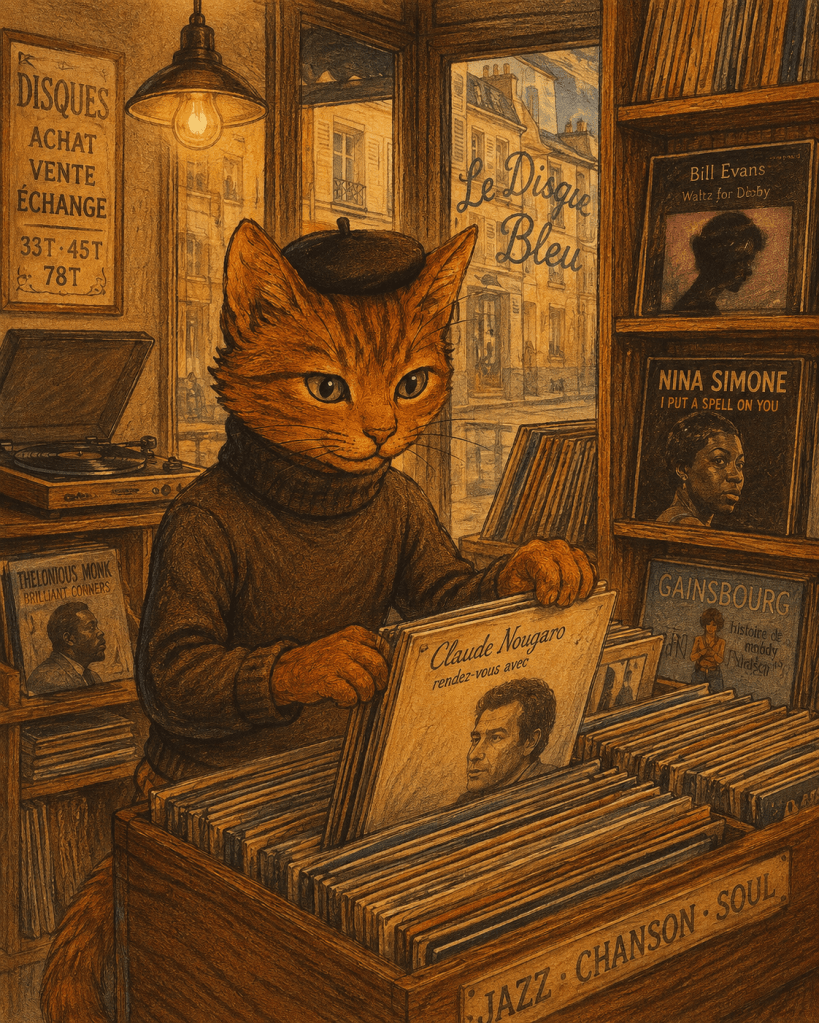
Marcel, at home, thinking about the work he should be doing and not even attempting. Well, that’s what tomorrow is for. Today is just for music.
Darwin suggested that I might have more fun just listening and not thinking & making notes. So last week he hid my pens, and this gave me time to listen.
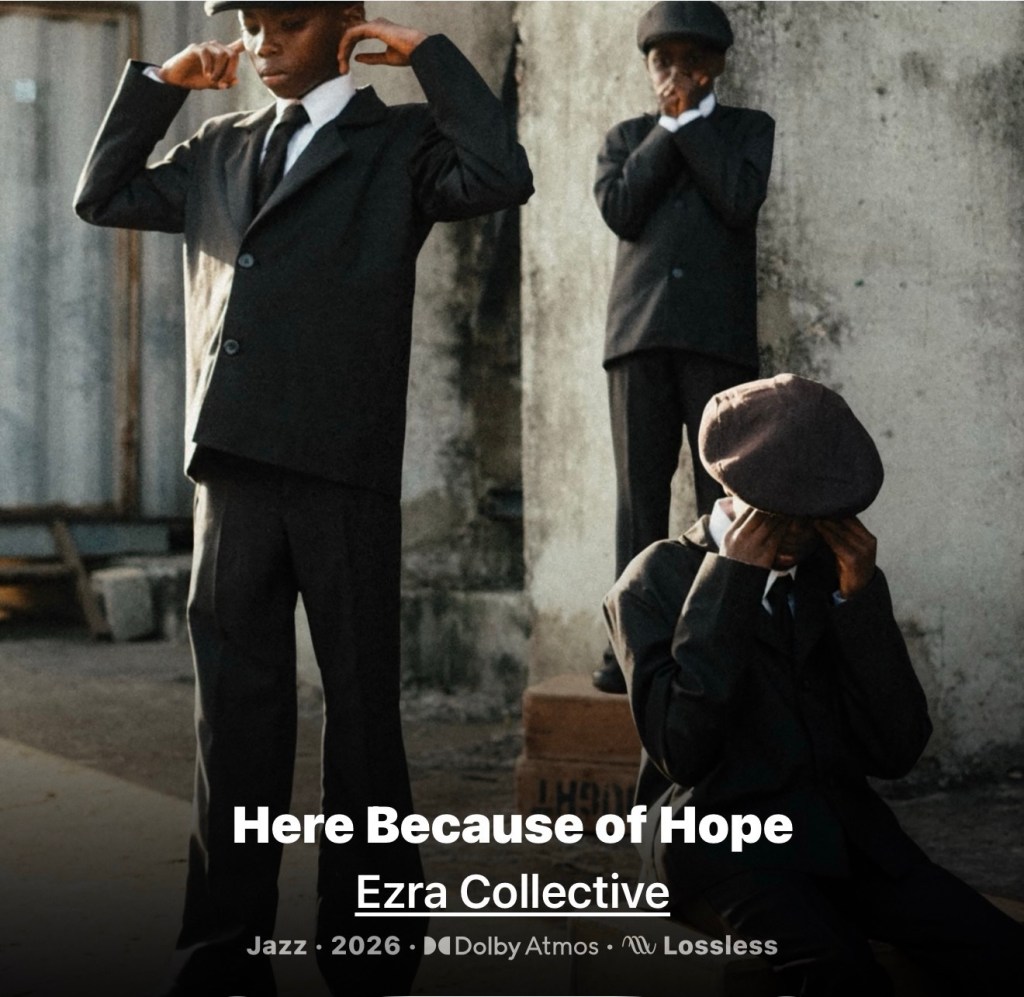
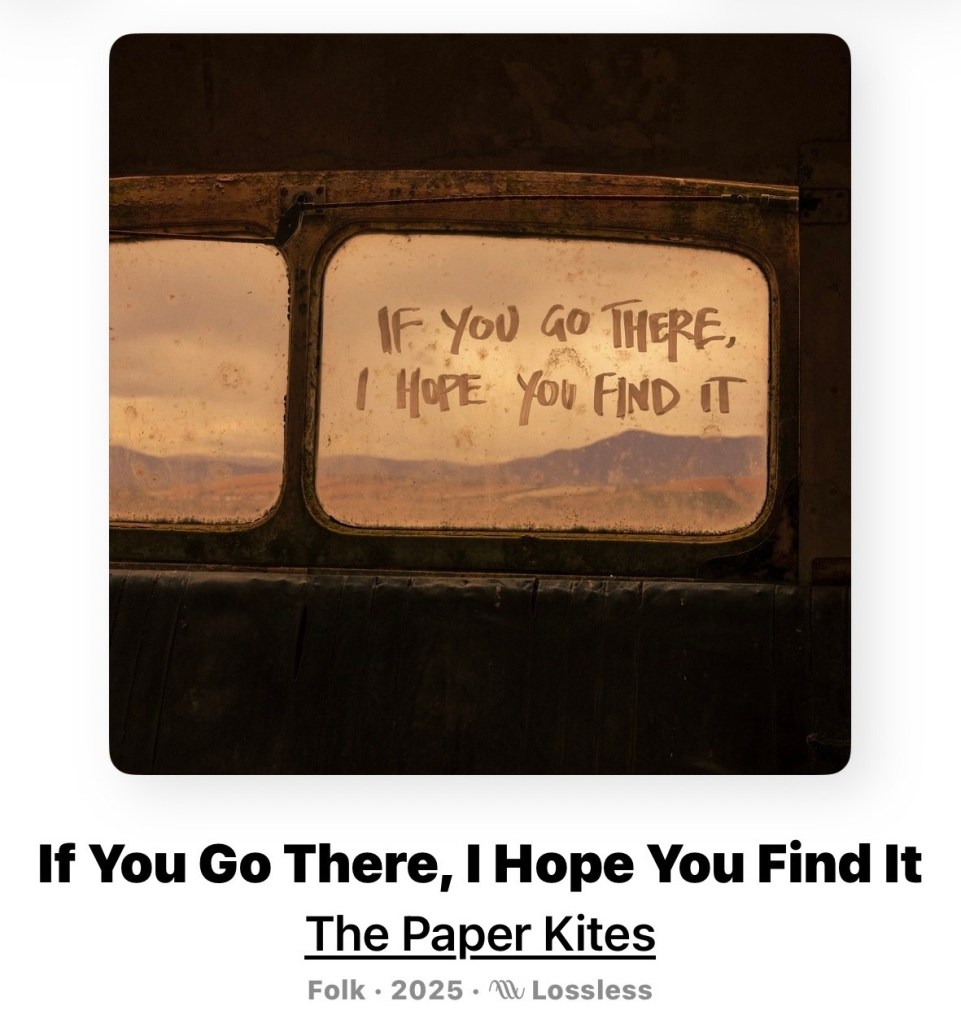
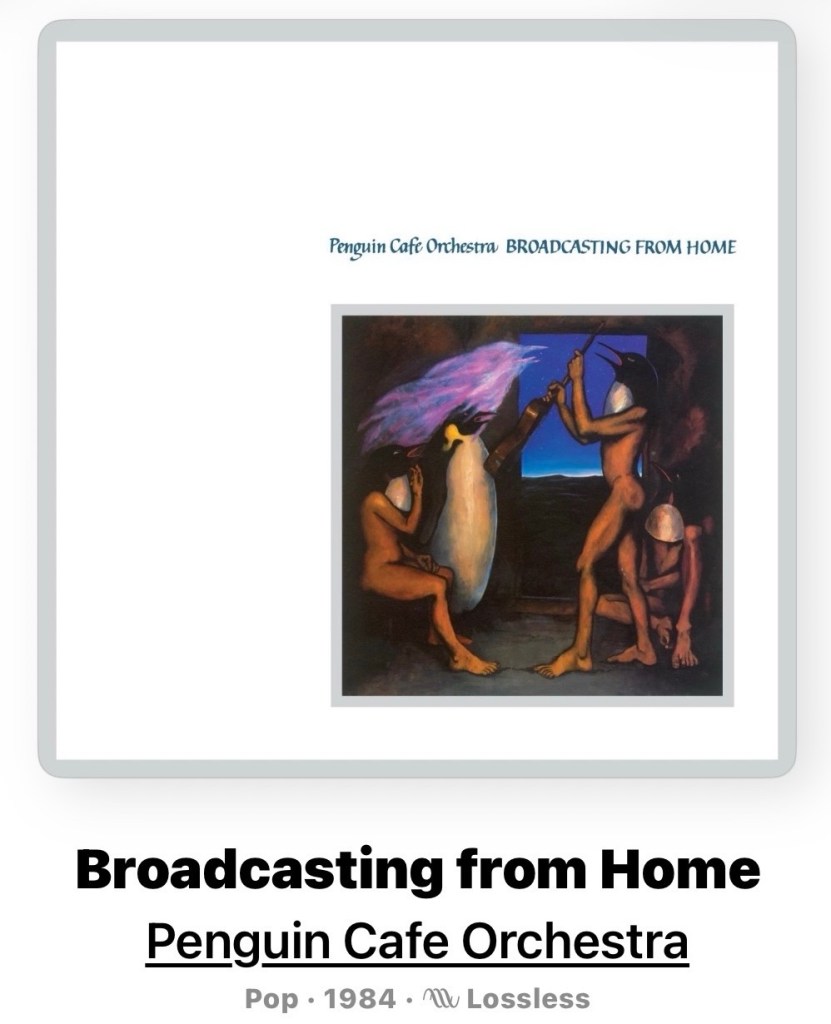
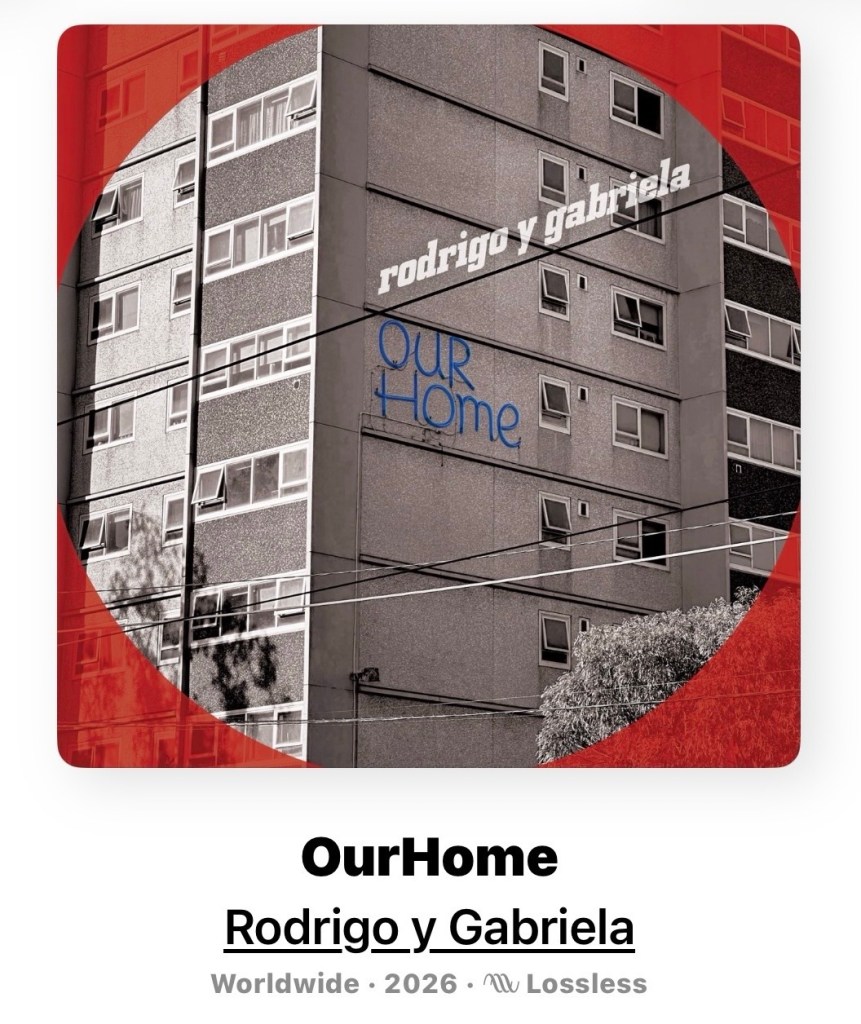
These are some of the albums that my turntable loved…
Here Because of Hope by Ezra Collective – image from my collection
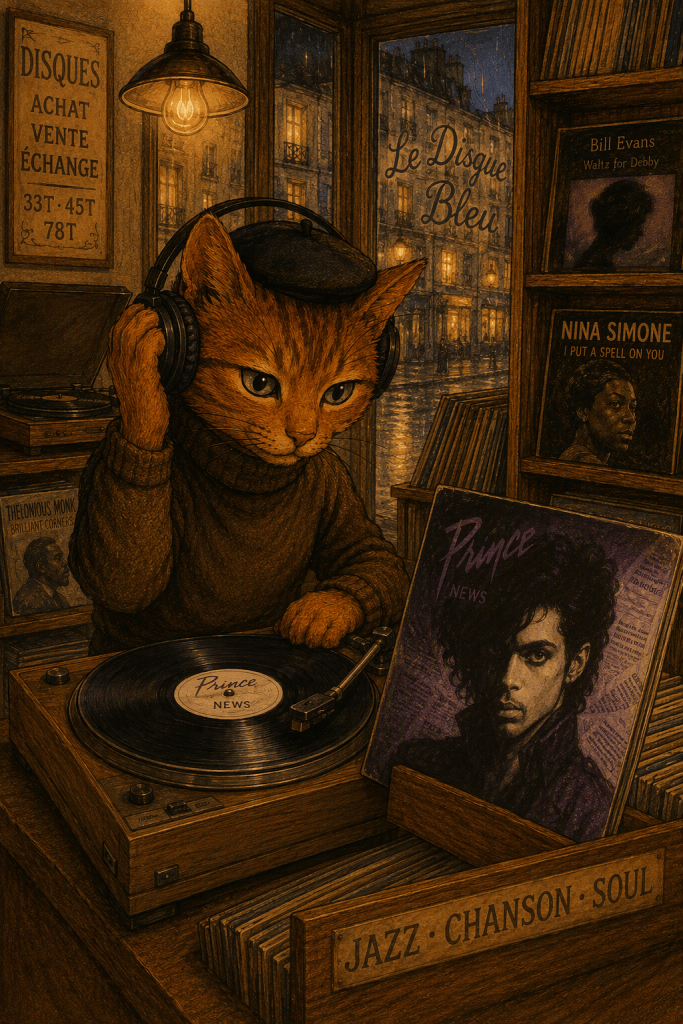
Marcel had closed the door to his music store, turned the lights down low and the volume up.
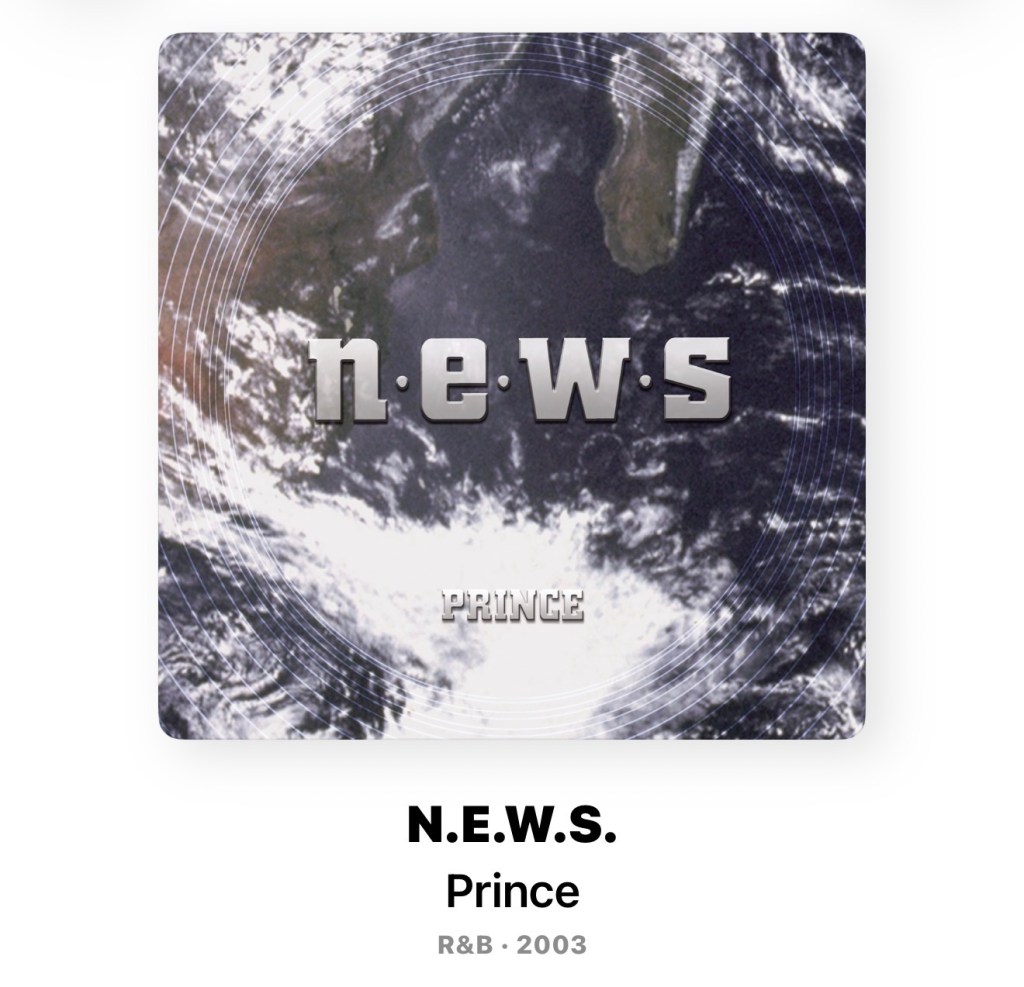
Marcel Reviews: Prince — N.E.W.S. (2003)
There are albums you play.
There are albums you listen to.
And occasionally there are albums where the sensible course of action is to turn off the lights, close your eyes and allow the thing to happen to you.
N.E.W.S. is one of those.
Prince has dispensed with songs, choruses, singles and practically anything resembling an obligation to explain himself. Instead we have four pieces — North, East, West and South — each exactly fourteen minutes long.
Marcel approves of this immediately.
“Four tracks,” he says, settling into the chair.
“Manageable ambition.”
The coffee is placed beside him.
It will eventually go cold.
Because once North begins, getting up seems inappropriate.
N.E.W.S. by Prince. Album artwork from my own music library.
1. North ❤️
At first, North feels less like a composition than somewhere you have arrived.
There is space everywhere.
Sounds appear, hover for a while and disappear again. Prince doesn’t seem interested in dragging you towards a melody. He allows the music to unfold at its own speed, with Eric Leeds’ saxophone moving through it like another voice in the room.
And underneath everything, the rhythm keeps the piece from drifting entirely into abstraction.
It is jazz, funk, atmosphere and something slightly cinematic, but none of those descriptions quite contains it.
Marcel closes his eyes.
This is significant.
Usually he is checking whether somebody has moved his coffee.
Not today.
2. East ❤️
If North invited us into the room, East begins rearranging the furniture.
There is more movement here, more tension and a slightly stranger atmosphere. Instruments don’t so much take turns as circle one another.
Prince’s great talent on N.E.W.S. is restraint.
He could dominate the record.
He doesn’t.
Instead the pleasure comes from hearing four musicians responding to one another — Prince, Leeds, bassist Rhonda Smith and drummer John Blackwell — without anyone apparently worrying about where the radio edit might begin.
There isn’t one.
Excellent.
Marcel stretches a paw.
“This,” he announces, “is why songs do not always require words.”
Nobody had suggested otherwise.
3. West ❤️
By West, something rather wonderful has happened.
Time has stopped being particularly important.
You are no longer waiting for the next track or wondering when the chorus will arrive because N.E.W.S. has quietly taught you how it wants to be heard.
You surrender.
Little rhythmic ideas emerge. A keyboard phrase passes through. Saxophone answers. Bass shifts underneath. Something changes almost imperceptibly and suddenly you realise the music has travelled considerably further than you thought.
This isn’t background music.
It might initially pretend to be background music.
That is how it gets you.
Play it quietly while doing something else and half the album disappears.
Play it in darkness with your eyes closed and West becomes enormous.
The coffee is now cold.
Marcel considers this an acceptable casualty.
4. South ❤️
By South, the four compass points no longer feel like separate destinations.
They feel like different views of the same landscape.
And this may be the greatest pleasure of N.E.W.S. — its refusal to hurry.
Prince spent much of his career demonstrating how many ideas he could cram into four minutes.
Here he demonstrates something almost opposite:
what happens when he gives an idea fourteen minutes in which to breathe.
Nothing needs to arrive with a fanfare.
Nothing needs to announce itself as THE IMPORTANT BIT.
You simply notice another texture, another rhythm, another small conversation taking place inside the music.
Eventually South finishes.
Marcel opens his eyes.
There is silence.
“Again?”
Yes, Marcel.
Again.
Marcel’s favourites
This presents a problem.
Normally Marcel chooses favourites because standards must be maintained and somebody around here apparently has to demonstrate discernment.
But N.E.W.S. doesn’t really work that way.
❤️ North ❤️ East ❤️ West ❤️ South
For once, the album is the favourite.
Do not shuffle it.
Do not dip into it.
And preferably don’t attempt anything productive while it is playing.
Find somewhere comfortable. Lower the lights. Close your eyes.
Then let Prince, Leeds, Smith and Blackwell take you North, East, West and South for fifty-six minutes.
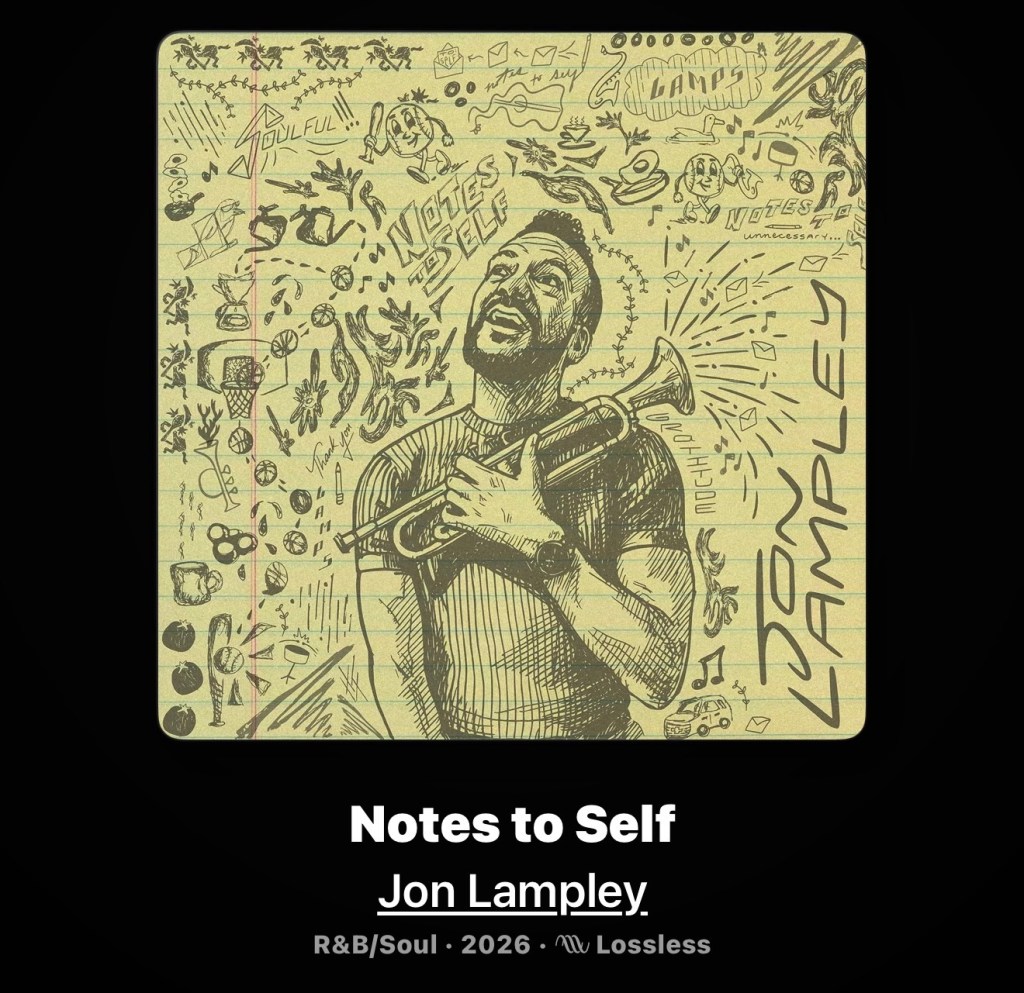
Montague handed this album to me from Jon Lampley, Notes to Self.
A new artist to me, this is his second album and I will be delighted to listen to his debut, Night Service.
Montague gushed as he handed the album over due to the opening track Unnecessarily Soulful Into, is the unofficial anthem for Ramblings Music. I have added the lyrics at the end of this post.
Notes to Self is a compact 25‑minute burst of musical personality — part journal, part jam session, part emotional check‑in. Lampley’s trumpet isn’t just an instrument here; it’s a narrator. The album moves between joy, reflection, and playful self‑awareness without ever losing its warmth.
The “unnecessarily soulful” motif becomes a running joke and a genuine thesis: Lampley is showing that soul doesn’t need to be grandiose. It can be small, daily, human. The collaborations are perfectly chosen, the production is clean but organic, and the whole record feels like a friend handing you a page torn from their notebook.
It’s an album that doesn’t try to be a masterpiece — and that’s exactly why it works.
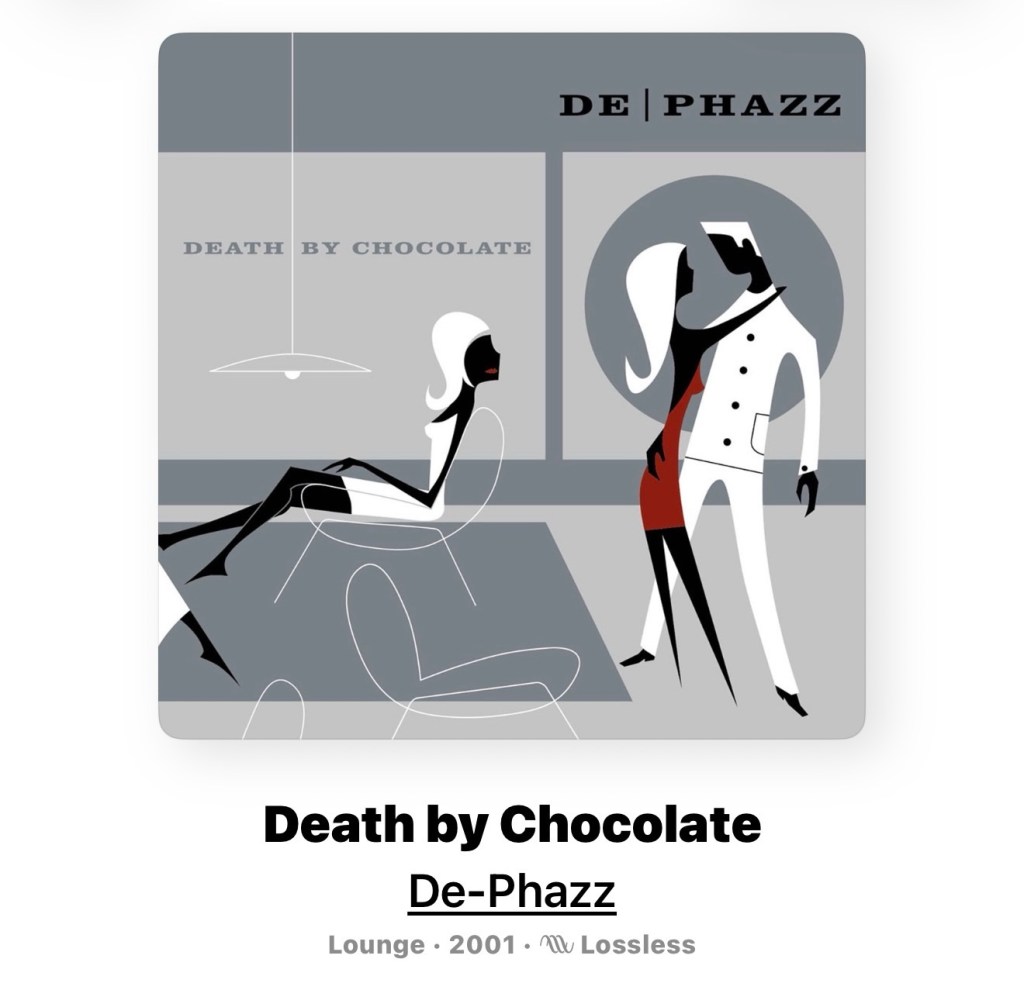
Darwin, the other day passed me this album, Death by Chocolate by De-Phazz. I was expecting… well, Darwin’s taste in music vastly differs from mine.
So going in with an open mind, I was soon entranced with some gorgeous pieces.
Album artwork from my own music library.
Death by Chocolate (2001) is peak De‑Phazz: a suave, playful blend of lounge, downtempo, nu‑jazz, and that unmistakable Phazz‑a‑delic cheekiness. It’s an album that never rushes; instead, it glides. You get brass that feels like neon reflections on wet pavement, vocals that slip between cabaret and soul, and grooves that are always just a little mischievous.
It’s also an album of characters — Pat Appleton’s smoky poise, Karl Frierson’s warm charisma, Barbara Lahr’s cool detachment, Joo Kraus’s trumpet cutting through like a spotlight. Every guest brings a different shade to the palette.
The whole record feels like a night out in a stylish, slightly surreal city — part Paris, part Berlin, part imaginary jazz‑lounge dreamscape.
Heartfixer
A crisp, confident opener. It’s De‑Phazz in “cool operator” mode — tight beats, smooth horns, and that sense of effortless swagger. It sets the tone: you’re in safe hands, and the night is young.
Something Special (feat. Pat Appleton)
Pat Appleton glides in with her signature warmth. This track is a little flirtatious, a little knowing — the kind of song that winks at you from across the bar. Appleton’s phrasing is velvet.
Nu Chic
A stylish, strutting piece of lounge‑funk. It feels like walking through a boutique hotel lobby with mirrored walls and soft lighting. De‑Phazz doing what they do best: making cool sound effortless.
Sabbatical (feat. Karl Frierson)
Frierson brings a soulful, almost theatrical energy. The track has a breezy, escapist vibe — like daydreaming about quitting your job and disappearing to a beach with no phone signal.
Better Now
A reflective, gently uplifting tune. It’s one of those De‑Phazz tracks that feels like a deep breath after a long week — calm, steady, quietly optimistic.
Death by Chocolate (feat. Joo Kraus)
The title track, and a standout. Kraus’s trumpet is the star: sharp, seductive, slightly dangerous. It’s noir‑ish, decadent, and deliciously smooth — like a dessert you know you shouldn’t have but absolutely will.
Jeunesse Dorée (feat. Pat Appleton)
Appleton returns with a track that feels like a satirical toast to the glamorous elite. It’s bubbly, chic, and lightly ironic — champagne fizz in musical form.
Online (feat. Pat Appleton & Barbara Lahr)
A playful commentary on early‑internet culture (remember, this is 2001). Appleton and Lahr bounce off each other beautifully — one warm, one cool — creating a witty, slightly quirky duet.
Jim the Jinn (feat. Karl Frierson)
Frierson gives this track a theatrical, almost storybook quality. It’s whimsical, exotic, and full of character — like a short film in audio form.
Roy’s Choice (feat. Roy Randolph)
A deep‑cut gem. Randolph’s presence adds a vintage flavour — smoky, old‑school, almost blues‑lounge. It’s a late‑night track, best enjoyed with dim lights. The back half — the deeper, moodier stretch
Trash Box (feat. Pat Appleton)
Appleton brings a sly, playful tone to a track that feels like rummaging through emotional clutter. It’s quirky, rhythmic, and full of personality.
Jump Over (feat. Scarra Mucci)
A burst of energy. Scarra Mucci injects a dancehall‑inflected spark that shakes up the album’s lounge vibe. It’s unexpected — and that’s exactly why it works.
Maybe San José (feat. Karl Frierson)
Frierson at his most tender. A wistful, wandering track that feels like postcards from a place you’ve never been but somehow miss.
Call You / Love’s Labour’s Lost (feat. Pat Appleton)
A two‑part piece that blends modern lounge with literary melancholy. Appleton’s delivery is intimate, almost confessional. A quiet highlight.
North West (feat. Barbara Lahr)
Lahr’s cool, detached vocals give this track a minimalist, almost architectural feel. It’s crisp, modern, and quietly hypnotic.
Saw It on the Radio
A perfect closer — playful, meta, and gently satirical. It wraps the album with a wink, reminding you that De‑Phazz never takes themselves too seriously.
Final Thoughts
Death by Chocolate is one of those albums that rewards repeat listens. It’s stylish without being shallow, playful without being silly, and musically rich without ever losing its lounge‑core charm. It’s a world you step into — and once you’re inside, you don’t really want to leave.
Oh, and my favourite from this album, is the track Jim the Jinn featuring Karl Frierson.
I will be on the lookout for further albums, I must thank Darwin!!
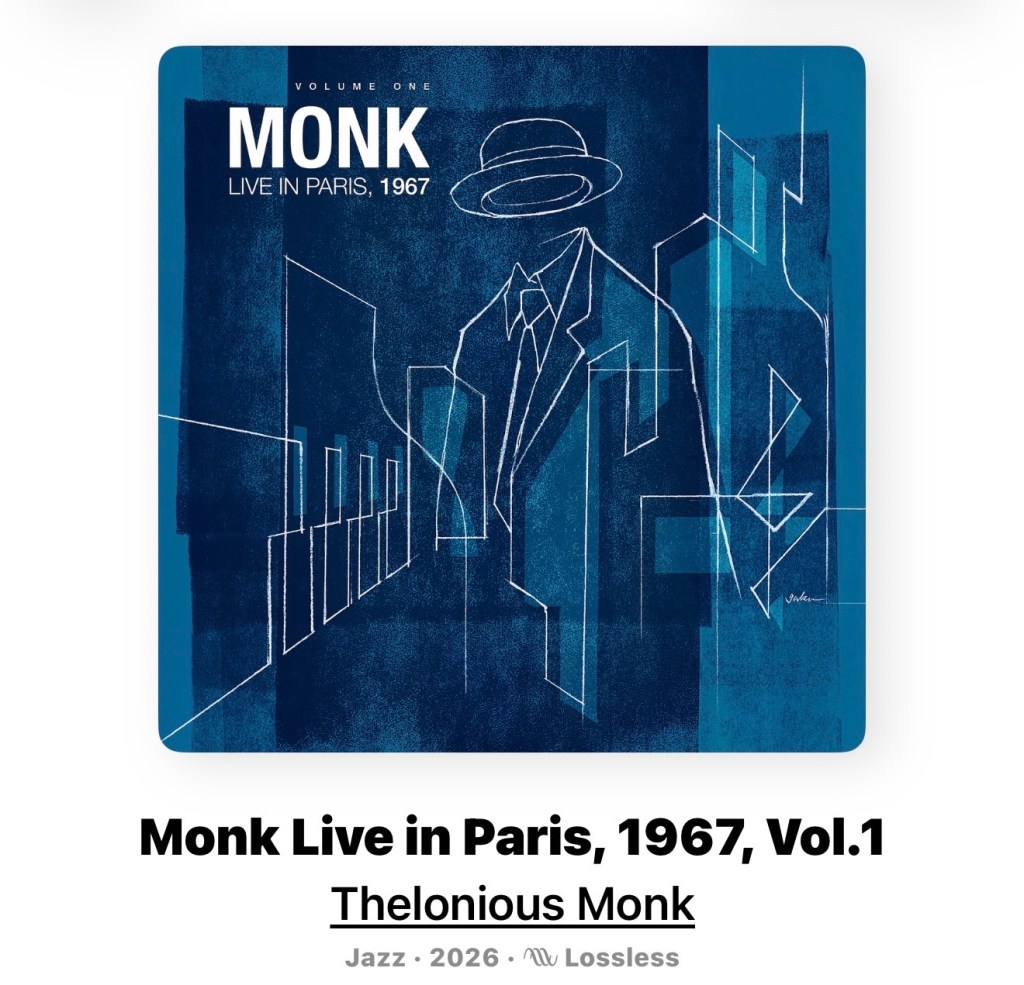
Tonight I am listening to one of my favourite artists – Thelonious Monk, this time going back to 1967 and in Paris.
Album artwork from my own music library.
⭐ Overview — Monk Live in Paris, 1967, Vol. 1
This album feels like opening a time capsule sealed in cigarette smoke, brass heat, and the strange geometry of Monk’s mind. It’s Paris in ’67 — a city already humming with artistic electricity — and Monk arrives not as a visitor but as a gravitational force.
What makes this recording special is the ensemble energy: Griffin and Woods sparring like fencers, Rouse weaving that familiar warm reed‑tone, Copeland and Cleveland adding colour, and Riley/Gales locking the pulse with absolute trust.
It’s not a “greatest hits” set — it’s a portrait of Monk in motion, caught mid‑stride, mid‑thought, mid‑alchemy. The performances feel lived‑in, conversational, and gloriously imperfect in the way only real jazz can be.
🎵 Track‑by‑Track Review
Introduction (Live)
A short doorway into the room. You hear the ambience, the crowd settling, the musicians adjusting their instruments. It’s the sound of anticipation — that moment before Monk’s angular universe snaps into place. It sets the tone: we’re not listening to a studio artefact; we’re entering a night.
Epistrophy (Live)
This is the first real ignition point. “Epistrophy” is Monk’s labyrinth — sharp corners, sudden drops, rhythmic puzzles — and here it becomes a multi‑horn conversation.
Griffin and Woods trade lines like two poets arguing in different dialects.
Copeland’s trumpet cuts through with bright, metallic punctuation.
Rouse, ever the loyal interpreter, threads Monk’s logic into something warm and human.
Riley and Gales keep the whole thing from flying apart, grounding the chaos with swing.
It’s exhilarating, slightly unruly, and absolutely alive.
Evidence (Live)
If “Epistrophy” is the maze, “Evidence” is the courtroom. Monk presents his musical argument with clipped phrases, unexpected silences, and those trademark rhythmic nudges that feel like he’s testing the floorboards.
The horns respond like witnesses:
Woods brings sharp articulation,
Griffin adds swagger,
Copeland and Cleveland give the brass section a muscular presence,
Rouse ties it all together with that warm, rounded tone.
It’s witty, sly, and full of Monk’s sideways humour.
Ruby, My Dear (Live)
A complete mood shift — suddenly the room softens. This is Monk at his most tender and architectural, building emotion through space rather than density.
Rouse shines here. His playing is intimate, almost confessional, and Riley/Gales give him the gentlest frame to lean against. Monk’s piano feels like someone touching a memory with careful fingertips.
It’s the emotional heart of the set.
We See (Live)
A perfect closer. “We See” has that sly Monk grin — playful, slightly off‑centre, full of rhythmic mischief.
Copeland’s trumpet adds sparkle, Rouse dances around Monk’s phrases, and Riley/Gales keep the groove loose but insistent. It feels like the band is enjoying themselves, leaning into Monk’s quirks rather than smoothing them out.
It leaves you with the sense of a night well spent — not polished, not perfect, but deeply human.
🎼 Final Thoughts
Monk Live in Paris, 1967, Vol. 1 is a snapshot of a master surrounded by musicians who understand his language and relish the challenge of speaking it. It’s warm, angular, funny, emotional, and unmistakably Monk.
By 1967, Monk was 50 years old — a veteran, a survivor, and a legend. He had spent decades fighting for recognition in the United States, often misunderstood by critics who didn’t know what to do with his eccentricities. But Europe understood him.
This period marks:
His late‑career touring peak, with the classic quartet (Charlie Rouse, Larry Gales, Ben Riley) forming the backbone of his sound.
A shift toward more spacious, architectural playing — fewer notes, more meaning.
Increasing physical and emotional fatigue, which gave his performances a kind of haunted beauty.
Paris was one of the places where he still felt energised, still willing to push, still capable of those sudden bursts of angular brilliance.